De La Soul Return With Cabin In The Sky: A Soulful, Forward-Looking Hip-Hop Statement That Honors the Past Without Living in It
Few hip-hop releases in 2026 arrive with the emotional gravity, historical importance, and creative clarity of Cabin In The Sky, the powerful new full-length from legendary group De La Soul. Officially released on January 23, 2026 via Mass Appeal, the album marks the group’s ninth studio project and their first complete body of work since 2016—yet it feels anything but nostalgic or ceremonial.
Instead, Cabin In The Sky lands as a focused, deeply human, and quietly confident hip-hop record that reaffirms De La Soul’s place as one of the culture’s most thoughtful and emotionally grounded voices.
For JamFest listeners and longtime fans, tonight’s NRN Radio Show will be shining a special spotlight on the album with Unveiling the Enchantment: A Very Special Handpicked New Release by Your Favorite Music Artist – De La Soul, celebrating the return of a group that helped redefine what hip-hop could sound like, feel like, and stand for.
At the heart of this album is an unmistakable emotional truth. Cabin In The Sky is shaped by the passing of founding member David “Trugoy the Dove” Jolicoeur in 2023, and the presence of his final recorded performances carries enormous meaning. Yet what makes this record remarkable is how deliberately it avoids becoming a memorial project. Trugoy’s voice is not framed as a closing chapter. It is treated as a living part of the music.
Across twenty carefully sequenced tracks, Posdnuos and Maseo build a creative space that feels intentional and alive, weaving Trugoy’s vocals into songs that move forward rather than looking back. The result is an album that honors legacy without freezing it in time.
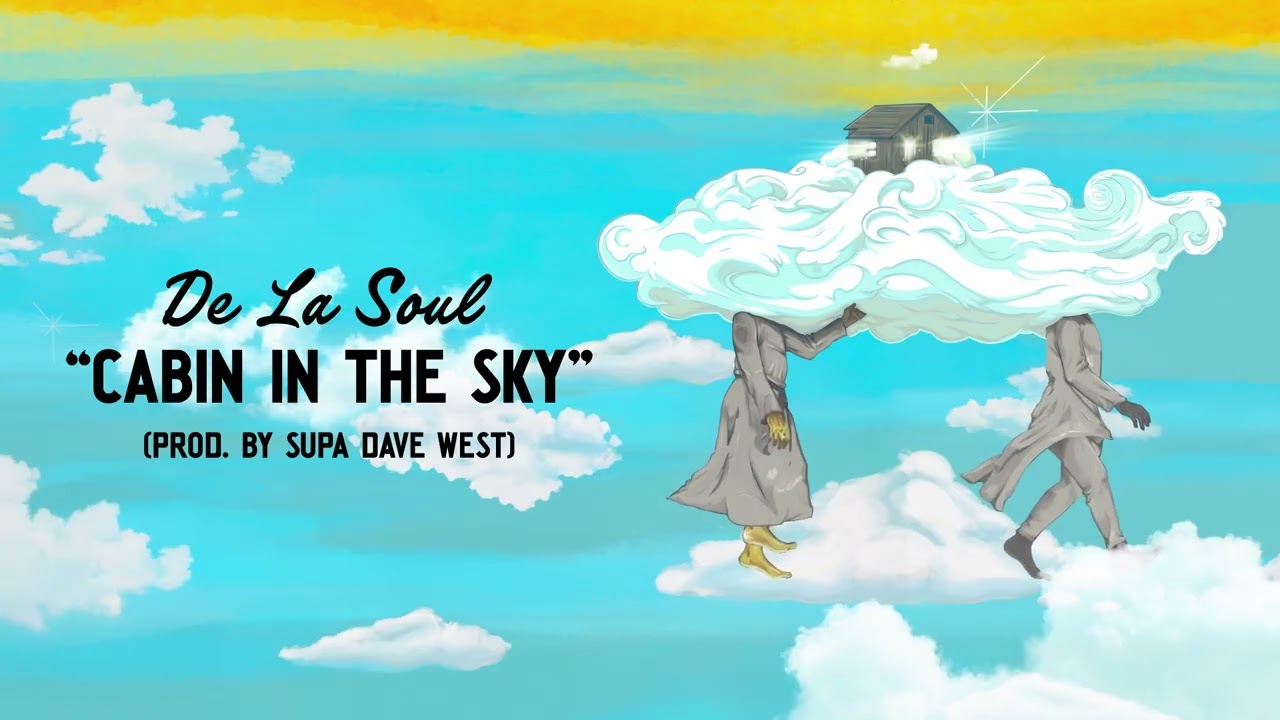
The title Cabin In The Sky quietly defines the emotional architecture of the project. It suggests refuge. Distance from noise. A private place where reflection, creativity, and clarity can exist without interruption. That concept runs through the entire album, shaping both the tone and the pacing. The music never rushes. The verses are given room to stretch. Hooks unfold naturally. Every moment feels considered.
Sonically, De La Soul reconnect with the kind of craftsmanship that made their catalog so influential in the first place—without attempting to recreate any single era of their sound. The production lineup alone reads like a generational bridge between hip-hop’s foundation and its present. Contributions from DJ Premier, Pete Rock, Jake One, Supa Dave West, and the group themselves establish a warm, analog-leaning palette built on textured drums, soulful samples, and restrained arrangements.
Nothing here feels maximalist. The beats are patient. The grooves are understated. The emphasis is on feel, not spectacle.
This production approach becomes the perfect backdrop for the album’s greatest strength: conversation.
The guest appearances on Cabin In The Sky are not deployed as marketing moments. They function as peer exchanges among artists who understand both the cultural weight and the creative responsibility attached to this record. Verses from Nas, Black Thought, Common, Killer Mike, Slick Rick, and Q-Tip appear throughout the album—but never overpower the identity of the group.
When Nas steps into a track, it feels like an extension of the album’s central dialogue about growth, survival, and perspective. Black Thought delivers with surgical precision, grounding his verse in lived experience rather than technical bravado. Common brings emotional gravity and reflective calm. Killer Mike adds urgency and fire, balancing personal conviction with broader cultural commentary. These collaborations feel earned, not ornamental.
One of the album’s most affecting early moments arrives with “The Package,” built around Trugoy’s vocals and Pete Rock’s production. The track sets the emotional temperature for what follows—not by directly addressing loss, but by allowing the feeling of absence and presence to coexist in the same space. It captures something far more powerful than tribute: continuity.
“RUN IT BACK!!,” featuring Nas, pushes the record forward with quiet momentum, pairing reflective lyricism with subtle grit. Meanwhile, “A Quick 16 For Mama,” anchored by Killer Mike, injects raw sincerity into the project’s broader narrative of family, accountability, and personal legacy.
Throughout the album, De La Soul remain remarkably grounded. There is humor in the writing. There is perspective in the storytelling. There is self-awareness without self-indulgence. The group never chases relevance, nor do they retreat into safe legacy territory. Instead, they sound exactly like artists who understand their place in history—and still believe deeply in the present.
What ultimately separates Cabin In The Sky from many late-career releases is its emotional balance. The album acknowledges grief without centering it. It acknowledges time without surrendering to it. It recognizes change without resisting it.
Trugoy’s voice appears throughout the record not as a closing echo, but as an active participant in the creative process. His delivery still carries the playful unpredictability and emotional sincerity that helped define De La Soul’s identity from the very beginning. Hearing him woven so naturally into new music reinforces what fans have always known—his presence was never just stylistic. It was foundational.
Nearly four decades into their career, De La Soul sound focused, calm, and creatively free. Cabin In The Sky does not attempt to summarize everything the group has accomplished. It does not try to compete with their own mythology. It simply captures who they are now—artists shaped by history, connected to community, and still deeply committed to thoughtful hip-hop as a living art form.
For JamFest listeners, tonight’s NRN Radio Show feature—Unveiling the Enchantment: A Very Special Handpicked New Release by Your Favorite Music Artist – De La Soul—offers the perfect entry point into one of the most meaningful hip-hop albums of the year. Cabin In The Sky is not a farewell. It is not a retrospective. It is a continuation of a conversation that De La Soul began long ago—and one they are still uniquely equipped to carry forward.

 DJ Don Edwards