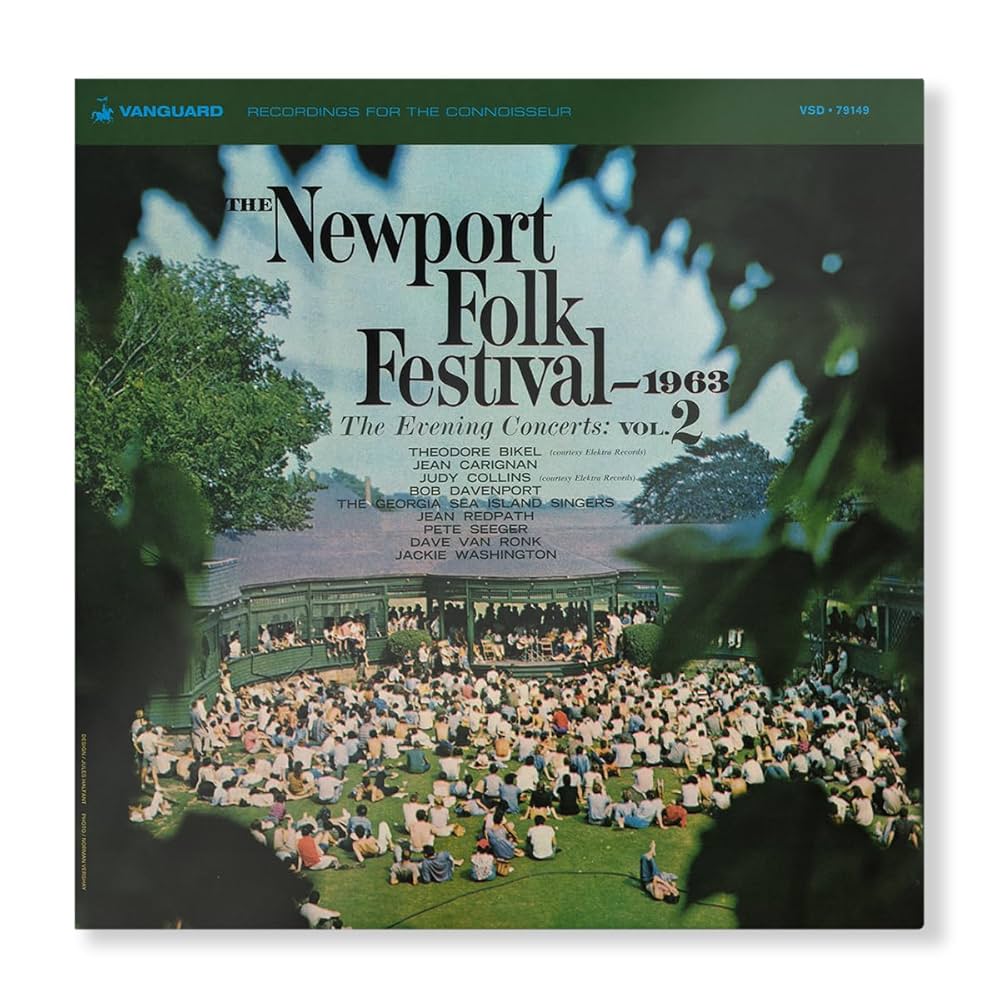
The Newport Folk Festival 1963 – The Evening Concerts: Vol. 2 is All Things Considered Live

 DJ Don Edwards
JamFest Elevates the Live Music Experience: From Newport’s Historic Stage to a Modern Broadcast Revolution with All Things Considered Live. There is a growing divide in how music is consumed versus how it was meant to be experienced. On one side sits the algorithm—fast, disposable, and fragmented. On the other is something far more enduring: the live performance, where sound, space, and human presence converge into a moment that cannot be replicated. JamFest has made a decisive move toward the latter, building a platform that does not simply stream music, but restores the depth, narrative, and cultural weight that define great live recordings. At the center of that vision is All Things Considered Live, a weekly radio broadcast that transforms archival recordings and contemporary performances into a seamless, immersive listening experience designed for audiences of all ages.
This is not a passive listening environment. It is a curated journey through the most meaningful stages in American music history, driven by performances captured by NPR Music at some of the country’s most iconic venues and festivals. Through All Things Considered Live, JamFest is not only presenting music—it is contextualizing it, giving listeners a clear throughline from the roots of the folk revival to the present-day festival circuit. The result is a program that feels both timeless and immediate, offering discovery, rediscovery, and a deeper understanding of how live music continues to shape culture.
A defining example of this approach is the inclusion of The Newport Folk Festival 1963 – The Evening Concerts: Vol. 2, a recording that represents one of the most important gatherings in modern music history. The 1963 festival was not simply an event—it was a convergence point for tradition, innovation, and social change. Drawing tens of thousands of attendees and featuring an expansive lineup of performers, Newport became a proving ground where folk music evolved from regional expression into a national—and ultimately global—force.
Volume 2 of the evening concerts captures that transformation in real time. The performances reflect a spectrum of styles and traditions that, when heard together, form a cohesive narrative about where American music stood at that exact moment. The opening selections from Bessie Jones & The Georgia Sea Island Singers ground the album in spiritual tradition, with performances that carry a raw, communal intensity. These are not polished studio takes—they are living expressions of heritage, delivered with a rhythmic and vocal interplay that speaks to generations of oral tradition.
Jackie Washington’s contributions bring a different dimension, blending humor, storytelling, and musicianship into performances that feel both intimate and expansive. Bob Davenport’s work leans into the working-class roots of folk music, while Judy Collins and Theodore Bikel introduce a refined, interpretive approach that bridges traditional material with a more contemporary sensibility. Bikel’s solo performances, in particular, highlight the global reach of folk traditions, drawing from European influences and presenting them within the broader American revival context.
The second half of the album deepens that diversity. Dave Van Ronk’s unmistakable voice and guitar work deliver a level of grit and authenticity that would go on to influence an entire generation of singer-songwriters. Jean Redpath’s performances add a Scottish folk dimension, reinforcing the international threads that run through the genre. Jean Carignan’s violin work injects a technical brilliance and energy that shifts the sonic palette, demonstrating how instrumental performance can carry as much narrative weight as lyrics.
Then there is Pete Seeger, whose presence at Newport is both symbolic and foundational. His closing performance, culminating in “This Land” as part of the festival finale, captures the collective spirit of the event. It is not just a song—it is a statement, a moment where artist and audience merge into a shared experience that transcends the individual performance. Through JamFest’s presentation on All Things Considered Live, that moment is not preserved as a static artifact; it is reactivated, placed into a modern listening context where its relevance can be felt just as strongly today.
What makes JamFest’s execution so effective is the way it integrates these historic recordings into a broader programming ecosystem. All Things Considered Live does not exist in isolation—it operates alongside high-energy, forward-facing shows that reflect the current state of global music culture. This balance is intentional. By pairing foundational performances from Newport with contemporary recordings from stages like Newport Folk Festival, SXSW, and the 9:30 Club, the program creates a continuous dialogue between past and present.
Listeners are not simply moving through a playlist; they are moving through time, hearing how musical ideas evolve, how performance styles shift, and how cultural context shapes sound. A folk standard from 1963 can sit comfortably alongside a modern festival set because JamFest understands that the connective tissue is not genre—it is authenticity, musicianship, and the power of live performance.
The technical quality of these broadcasts further reinforces their impact. Whether drawn from carefully restored archival recordings or captured in high-definition at contemporary venues, the sound is presented with clarity and depth, allowing listeners to fully engage with the nuances of each performance. This attention to sonic detail is critical. It ensures that the emotional and musical intent of each artist is preserved, whether it is the communal call-and-response of a spiritual, the intricate phrasing of a folk ballad, or the dynamic interplay of a live band on a festival stage.
Beyond the music itself, JamFest is building something more expansive—a cultural platform that prioritizes experience over convenience. In an era where music is often reduced to background noise, All Things Considered Live invites listeners to re-engage, to listen actively, and to appreciate the craft and context behind each performance. It is a return to a more intentional way of experiencing music, one that values depth over speed and connection over consumption.
The recent resurgence of interest in high-quality physical reissues of recordings like The Newport Folk Festival 1963 – The Evening Concerts: Vol. 2 further underscores this shift. There is a growing recognition that these performances are not just historical documents—they are benchmarks of artistic expression that continue to influence musicians and audiences alike. JamFest is tapping directly into that movement, bringing these recordings into a modern broadcast format where they can reach a wider audience without losing their integrity.
Ultimately, what JamFest is accomplishing with All Things Considered Live is both ambitious and necessary. It is preserving the past while actively shaping the future, creating a platform where music is experienced as a continuum rather than a series of disconnected moments. For listeners, the value is immediate and lasting: a deeper understanding of the music they love, access to performances they may have never encountered, and a renewed appreciation for the power of live sound.
As the program continues to evolve, it stands as a clear statement of intent. JamFest is not here to follow trends—it is here to define a higher standard for how music is curated, presented, and experienced. And with All Things Considered Live leading the way, that standard is being set with authority, precision, and a genuine respect for the art form.