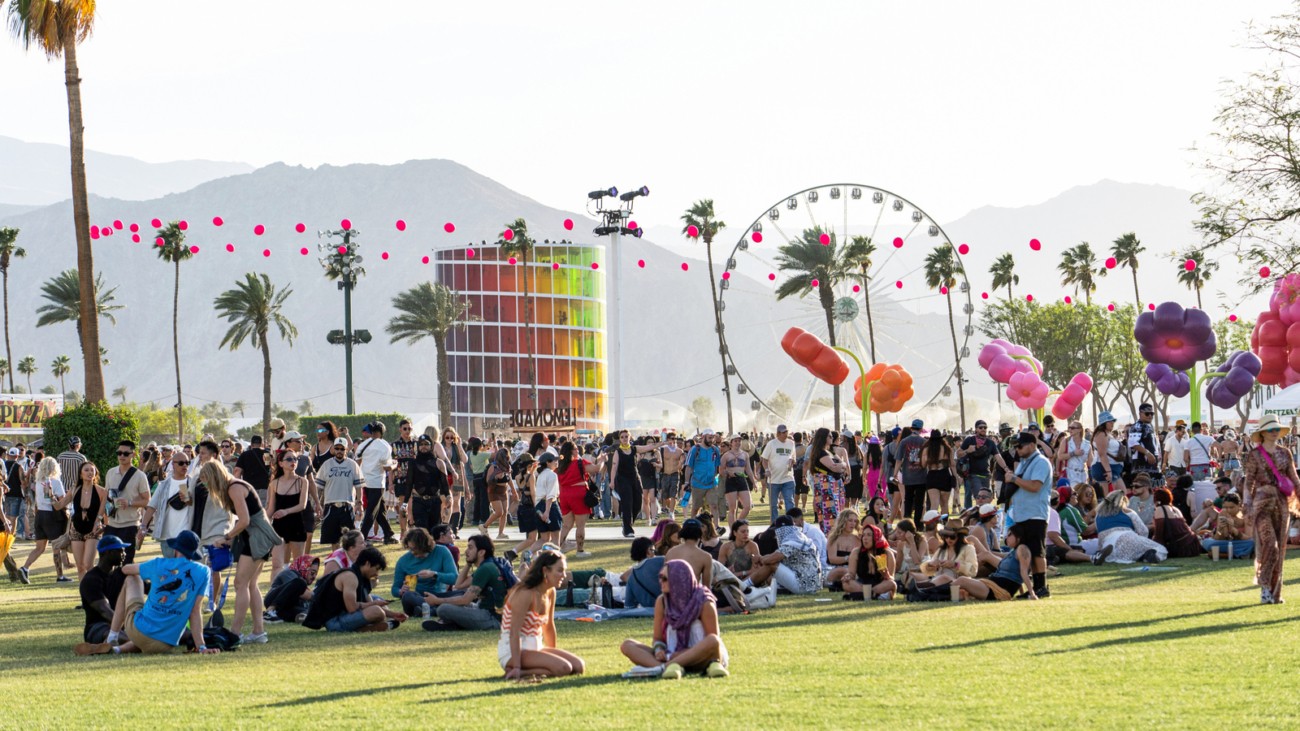
The global festival circuit has officially surged into full velocity, and by mid-April 2026 the landscape is already defining itself as one of the most culturally layered, sonically diverse, and commercially potent seasons in recent memory. What began as a strong early-year pulse has now expanded into a full-spectrum movement—anchored by landmark performances, accelerated by headline-making lineup drops, and fueled by a renewed appetite for large-scale communal music experiences that stretch across genres, generations, and geographies. From the California desert to the streets of New Orleans, from Chicago’s urban festival grounds to emerging boutique destinations in the Midwest and beyond, the modern festival ecosystem is not just thriving—it is evolving in real time.
At the center of the conversation sits Coachella 2026, which has once again reasserted itself as the cultural ignition point for the entire global season. The first weekend concluded with a series of moments that will likely be dissected, debated, and celebrated for months to come. Karol G delivered a defining performance, becoming the first Latin female artist to headline the festival—a milestone that signals not just representation, but a broader recalibration of global pop influence within the festival economy. Meanwhile, FKA twigs returned with a performance widely regarded as one of the most artistically complete sets of the weekend, reaffirming her position as one of the most compelling live performers of her generation.
Yet Coachella’s true power lies in its unpredictability. Surprise appearances have always been part of its DNA, but 2026 pushed that tradition further into spectacle. The Strokes emerging to open for Justin Bieber created a cross-genre collision that few saw coming, while the inclusion of Black Flag injected a raw, legacy-driven edge into a lineup otherwise dominated by contemporary chart leaders. These moments are not isolated—they are signals of a festival model increasingly driven by curation over convention, where the unexpected becomes the headline.
As Coachella sets the tone, the rest of the festival calendar has responded with a rapid succession of major announcements. In Chicago, Summer Smash has positioned itself as one of the defining hip-hop and crossover events of the summer, unveiling a lineup led by Lil Uzi Vert, Skrillex, and Playboi Carti. The booking reflects a continued convergence between electronic and hip-hop audiences, a trend that has accelerated significantly over the past three festival cycles and shows no signs of slowing.
On the East Coast, Governors Ball has dropped one of the most globally inclusive lineups in its history. Headlined by Lorde, Stray Kids, and A$AP Rocky, the festival is clearly leaning into international reach and cross-market appeal. This is not simply about booking big names—it’s about constructing a lineup that mirrors the listening habits of a streaming-first audience, where geographic boundaries are increasingly irrelevant.
Further reinforcing the diversity of the 2026 season, the Philadelphia Folk Festival has announced its initial artist wave for its 63rd year, continuing its long-standing tradition as one of the most respected heritage festivals in the United States. At the same time, newer and more experimental gatherings like Symmetry Music & Arts Festival are carving out space with immersive programming and forward-leaning lineups featuring LSDream, Zingara, and Krewella—a clear signal that boutique festivals are no longer niche, but essential components of the broader ecosystem.
This week itself represents a microcosm of the entire movement. In New Orleans, the French Quarter Festival has taken over the city with more than 300 musicians spread across 20 stages, transforming the historic district into a living, breathing soundtrack of jazz, funk, brass, and beyond. Simultaneously, SweetWater 420 Festival returns to Pullman Yards, while Breakaway Tampa activates Raymond James Stadium with a high-energy, dance-forward lineup. Along the coast in South Carolina, High Water Festival continues to build its reputation as a destination event, blending indie, folk, and alternative acts in a waterfront setting that has quickly become one of the most visually distinctive stops on the circuit.
Closer to home, the regional festival landscape is also gaining momentum. A newly announced reggae and Grateful Dead-inspired benefit event in Trenton—scheduled for July 25—underscores the enduring power of community-driven festivals. With a focus on hurricane relief efforts in Jamaica and the inclusion of a local artisan market, the event reflects a deeper trend toward purpose-driven programming, where music is paired with tangible impact.
Internationally, the influence of artist-curated festivals continues to expand. In London, Harry Styles has unveiled his vision for the Meltdown Festival, blending jazz, indie, and pop into a lineup that reflects his own eclectic artistic identity. This model—where artists act as curators rather than just performers—is reshaping how festivals are conceptualized, offering audiences a more cohesive and personalized experience.
What ties all of this together is not just scale, but continuity—and that is where JamFest has positioned itself as both a participant in and a documentarian of this global movement. The JamFest ecosystem extends beyond coverage; it lives within the music itself. The Festival Radio Show: Music From Music Festivals has become a cornerstone of that identity, delivering an immersive listening experience that mirrors the live circuit in real time. Every Thursday night, Festival Night transforms the airwaves into a non-stop, eight-hour journey through the very festivals defining the season—each track pulled directly from live performances that audiences have experienced firsthand. It is not a retrospective. It is not a playlist. It is a living archive of the modern festival era, curated with precision and delivered with the same energy that fuels the stages themselves.
This is where the convergence happens. The massive, headline-driven spectacles. The boutique, genre-specific gatherings. The community-rooted benefit events. The international, artist-curated showcases. They all feed into a single, expanding narrative—one that JamFest captures, amplifies, and redistributes through a platform built entirely around live music. No studio polish. No artificial edits. Just the raw, unfiltered energy of performance, preserved and presented in a way that extends the life of every festival far beyond its final set.
As the 2026 season continues to unfold, the trajectory is clear. Festivals are no longer isolated events on a calendar—they are interconnected nodes in a global network of culture, sound, and shared experience. The lines between genres are dissolving. The boundaries between local and global are fading. And the audience, more than ever, is at the center of it all—moving from stage to stage, city to city, and now, seamlessly, from the live field into the JamFest stream.
The next phase is already taking shape. More lineup drops are imminent. More surprise collaborations are inevitable. And more defining moments are waiting just beyond the horizon. The only question is not whether the festival season will deliver—it already has. The question is how far it will go from here, and how deeply it will continue to redefine what live music means in a world that is once again fully in motion.