Club culture has always moved in cycles — moments of excess, rebellion, reinvention, and underground revival. This week, those cycles collide in a powerful way. As December 13 arrives, the dance music world once again brushes up against some of the most pivotal nights in nightlife history, while modern club culture continues to push forward through late-night sets, festival energy, and all-night dance floors.
JamFest exists to connect those dots. From the iconic rooms that changed music forever to the after-hours culture that keeps the pulse alive today, this week is a reminder that the club scene has never been just about going out — it’s been about shaping sound, identity, and community.
December 14, 1978: The Night Studio 54 Cracked

December 14, 1978 remains one of the most infamous dates in nightlife history. On that night, federal IRS agents descended on Studio 54, the most famous nightclub in the world, and exposed what many suspected but few could prove. Owner Steve Rubell had reportedly joked to the press that only the Mafia made more money than his club. The IRS did not laugh.
What agents uncovered became legendary: hidden cash stuffed into ceiling spaces, garbage bags filled with unreported earnings, and detailed ledgers documenting skimming operations. The raid marked the beginning of the end for Studio 54’s original era of celebrity excess and velvet-rope mythology. Within two years, Rubell and business partner Ian Schrager were serving prison sentences for tax evasion, and the club was sold, closing the book on one of the most decadent chapters in dance music history.
Studio 54 didn’t just define disco — it defined the idea of nightlife as spectacle. But its collapse also proved that no club, no matter how famous, is immune to reality catching up.
From Glitter to Grit: The Limelight and the Club Kids Era
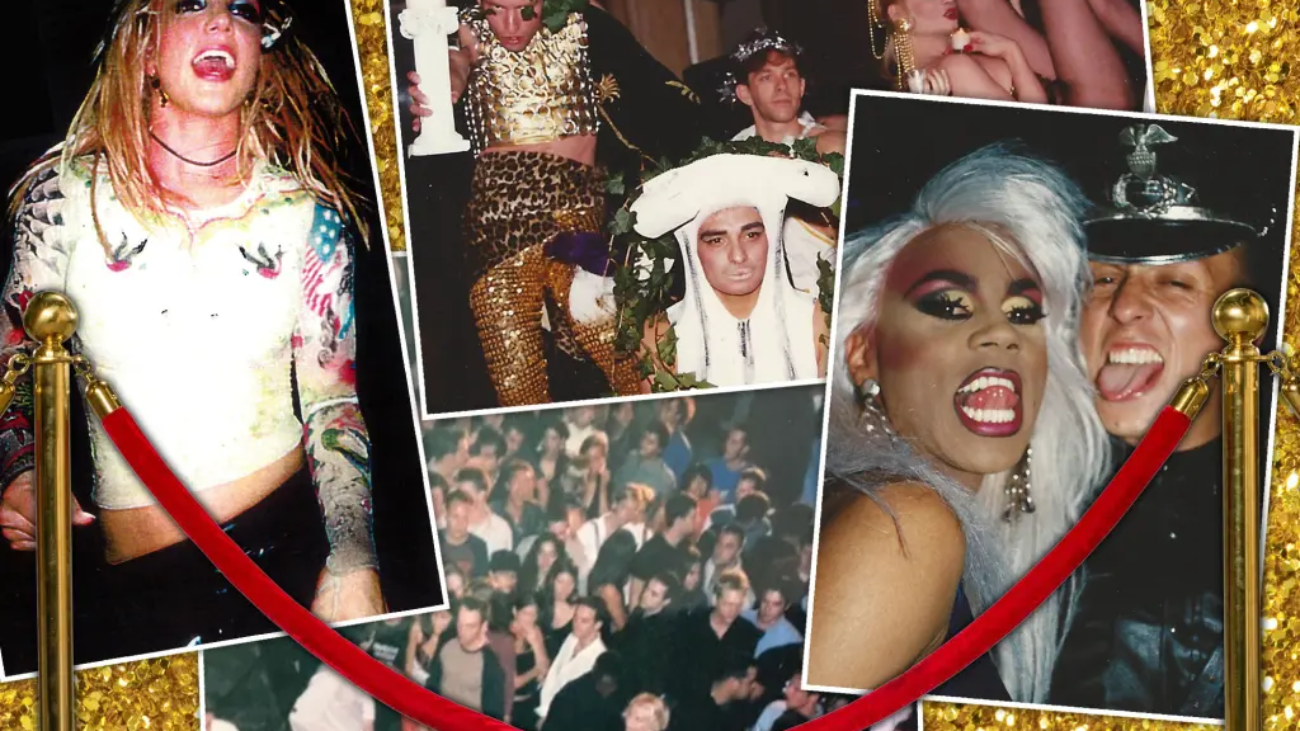
If Studio 54 symbolized disco’s polished fantasy, the Limelight represented the raw, confrontational energy of the 1990s New York underground. Operated by nightlife impresario Peter Gatien, the Limelight was housed inside a former Episcopal church on Sixth Avenue — a setting that perfectly mirrored its rebellious spirit.
Unlike the strict door politics of Studio 54, Gatien’s venues were known for what many called a democracy on the dance floor. Expression mattered more than status. That philosophy gave rise to the Club Kids, a movement defined by outrageous creativity and fearless self-presentation. Led by Michael Alig, the Club Kids transformed nightlife into performance art, arriving in handmade costumes that defied gravity, logic, and social norms.
The scene eventually spiraled into darkness, culminating in the 1996 murder of Andre “Angel” Melendez, a tragedy that shocked the club world and later inspired the film Party Monster. Still, the Limelight era left a lasting mark, proving that clubs could be cultural incubators, not just places to dance.
Paradise Garage: Where the Music Was the Star
While Studio 54 catered to celebrities and the Limelight to spectacle, Paradise Garage belonged to the dancers. Located at 84 King Street, the membership-only club became sacred ground for those who came not to be seen, but to feel the music.
Under the guidance of DJ Larry Levan, Paradise Garage redefined what a DJ could be. Levan obsessed over sound quality, often stopping the music mid-set to adjust a speaker or fine-tune the system. His legendary extended mixes, including marathon plays of Taana Gardner’s “Heartbeat,” pushed dancers into deep, hypnotic states. It was here that the foundations of Garage music were laid, influencing the birth of house and shaping dance floors around the world.
Paradise Garage proved that a club didn’t need glamour to be revolutionary. It needed trust between DJ and crowd, and a sound system capable of delivering emotion at full volume.
Then and Now: Where the Spirit Lives On
While many of these legendary rooms have closed, their influence remains alive in modern spaces that prioritize sound, atmosphere, and community. Venues like the former Original Sound Factory space on West 27th Street continue to host events inspired by classic warehouse energy, while rooms like Good Room in Brooklyn have become essential stops for underground dance music lovers seeking quality sound and immersive lighting.
Across the country tonight, that legacy continues in active club scenes. Philadelphia hosts multi-room house music gatherings, Houston turns back the clock with classic disco nights, and themed dance parties keep psych-influenced and electronic sounds moving well into the early hours.
Tonight on JamFest: The Party Never Stops
As the history echoes, JamFest carries the torch forward. Tonight, Club Night kicks off late, bringing high-energy DJ sets, in-studio mixes, remixes, and electronic sounds pulled straight from the world’s greatest music festivals. When the clock hits 2 a.m. EST, the momentum doesn’t fade — it shifts into Sunday Spunday.
From 2 a.m. through the early morning hours until around 9 a.m. EST, Sunday Spunday takes over, keeping the dance floor alive with nonstop EDM, festival-driven energy, and extended DJ sessions designed for the true after-hours crowd. It’s a celebration of the culture that never sleeps, where Saturday night flows seamlessly into Sunday morning.
Why This Week Still Matters
This week in club music history reminds us that nightlife has always been about more than entertainment. It has been a space for innovation, rebellion, community, and transformation. From the excess of Studio 54 to the underground soul of Paradise Garage, from the art-driven chaos of the Limelight to today’s all-night festival-inspired sets, the heartbeat of the club scene continues to evolve.
JamFest honors that history while keeping the speakers warm and the lights low. Tonight, the music doesn’t stop — it simply changes rooms, changes moods, and keeps moving forward, just as it always has.