
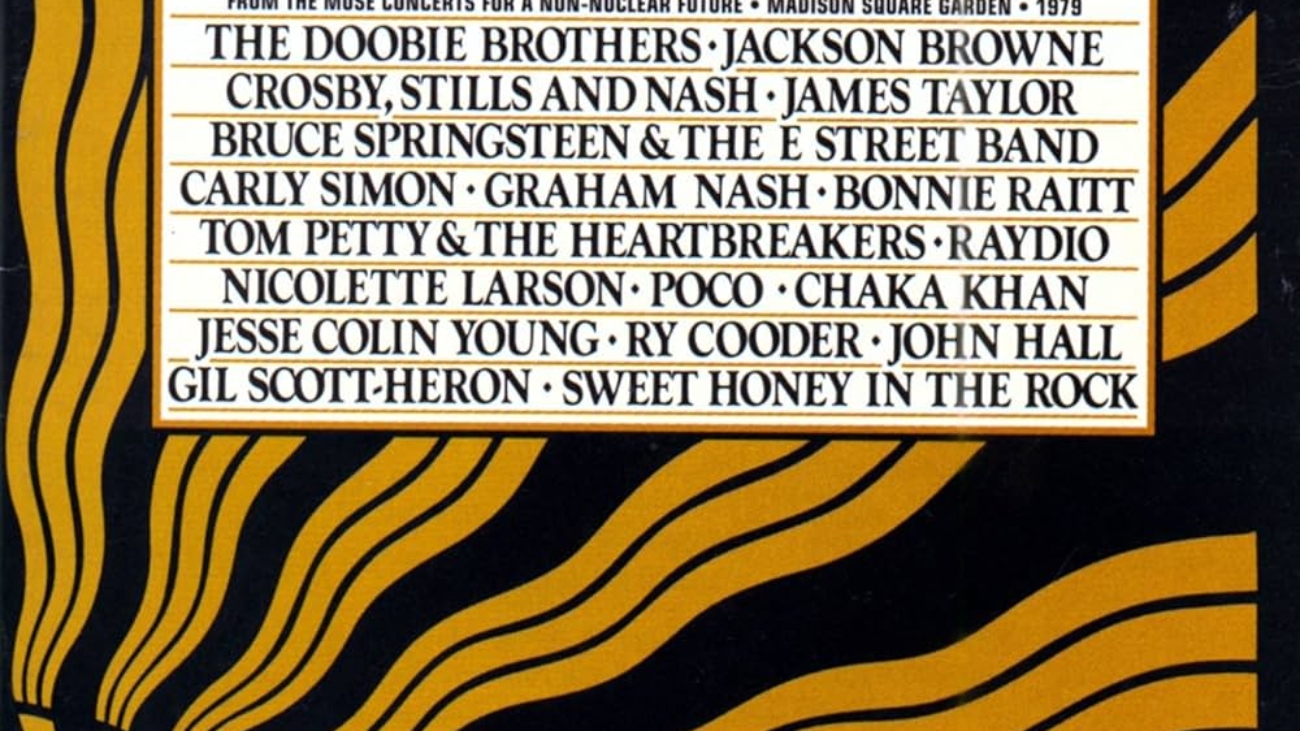
Few benefit concert series have ever reshaped the relationship between popular music and political activism the way the No Nukes concerts did.
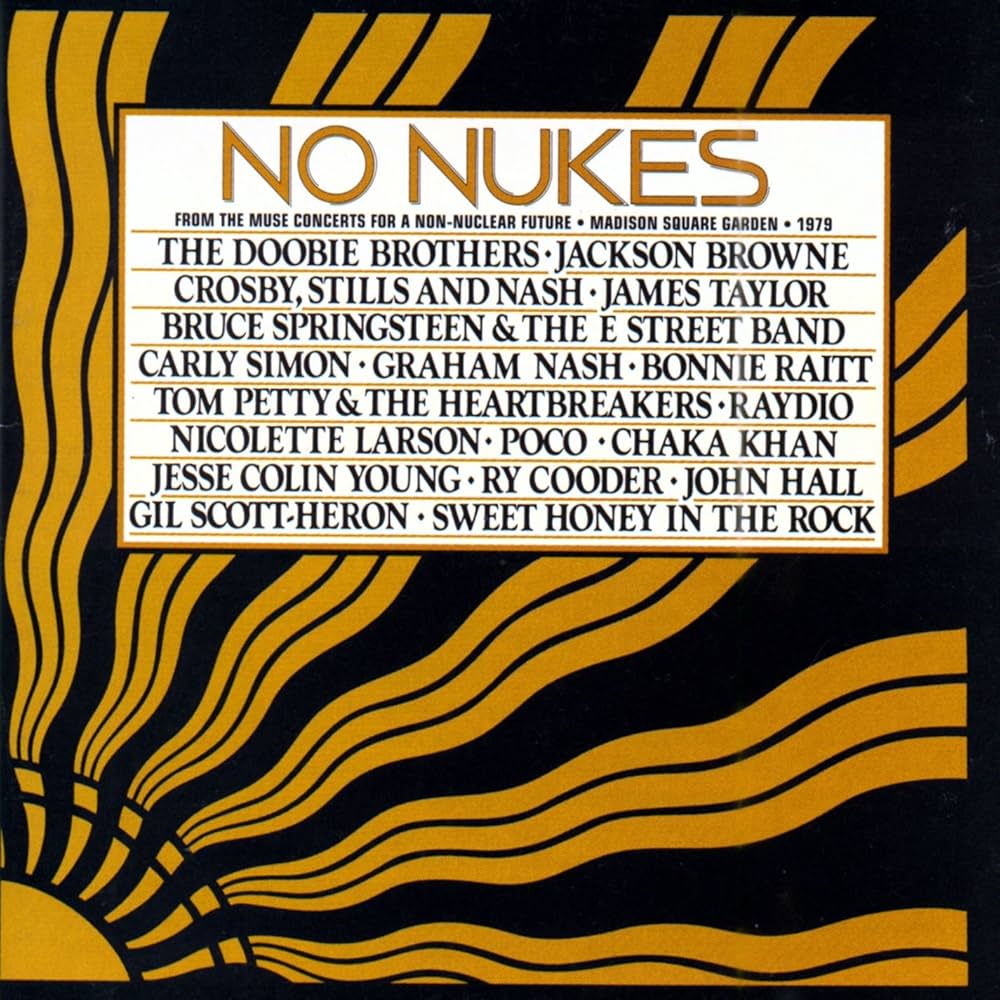
Officially known as The MUSE Concerts for a Non-Nuclear Future, these historic shows unfolded over five sold-out nights—September 19 through 23, 1979—at Madison Square Garden in New York City.
More than just another star-studded run of performances, No Nukes became a cultural turning point—a moment when mainstream rock artists stepped directly into public policy, environmental advocacy, and national debate.
And tonight, JamFest listeners can experience that legendary series exactly as it was meant to be heard.
🎙️ Tonight on Live Nuggets Radio — The Complete No Nukes Concerts
Tonight, and every Tuesday night at 9PM EST,
Live Nuggets Radio Show presents a very special, hand-picked broadcast of the entire No Nukes concert experience, aired in full.
From the opening moments inside Madison Square Garden to the final encore, this is a rare opportunity to hear one of the most historically important live concert series in rock history exactly as it unfolded.
For longtime collectors and new listeners alike, tonight’s broadcast is not a highlights reel—it is the full story.
A Movement Born from Crisis
The No Nukes concerts were organized by Musicians United for Safe Energy (MUSE), an artist-driven organization founded by Jackson Browne, Graham Nash, Bonnie Raitt, and John Hall.
The timing was not accidental.
Earlier in 1979, the Three Mile Island nuclear accident had shaken public confidence in the safety of nuclear energy in the United States. MUSE was formed to turn that fear and uncertainty into public engagement—using music as the megaphone.
What started as a series of benefit concerts quickly grew into a national cultural moment.
The five nights at Madison Square Garden were followed by a massive public rally at Battery Park that drew an estimated 200,000 people, placing musicians, activists, and audiences side by side in one of the largest artist-driven environmental demonstrations of the era.
A Lineup That Defined an Era
The No Nukes stage became a gathering point for the most influential singer-songwriters and rock acts of the late 1970s.
Across the five nights, the lineup included:
- Jackson Browne
- Crosby, Stills & Nash
- Bonnie Raitt
- Tom Petty and the Heartbreakers
- The Doobie Brothers
- Carly Simon
- James Taylor
- Chaka Khan
- Gil Scott-Heron
- Poco
But for many fans—and for rock history as a whole—the defining performances came from
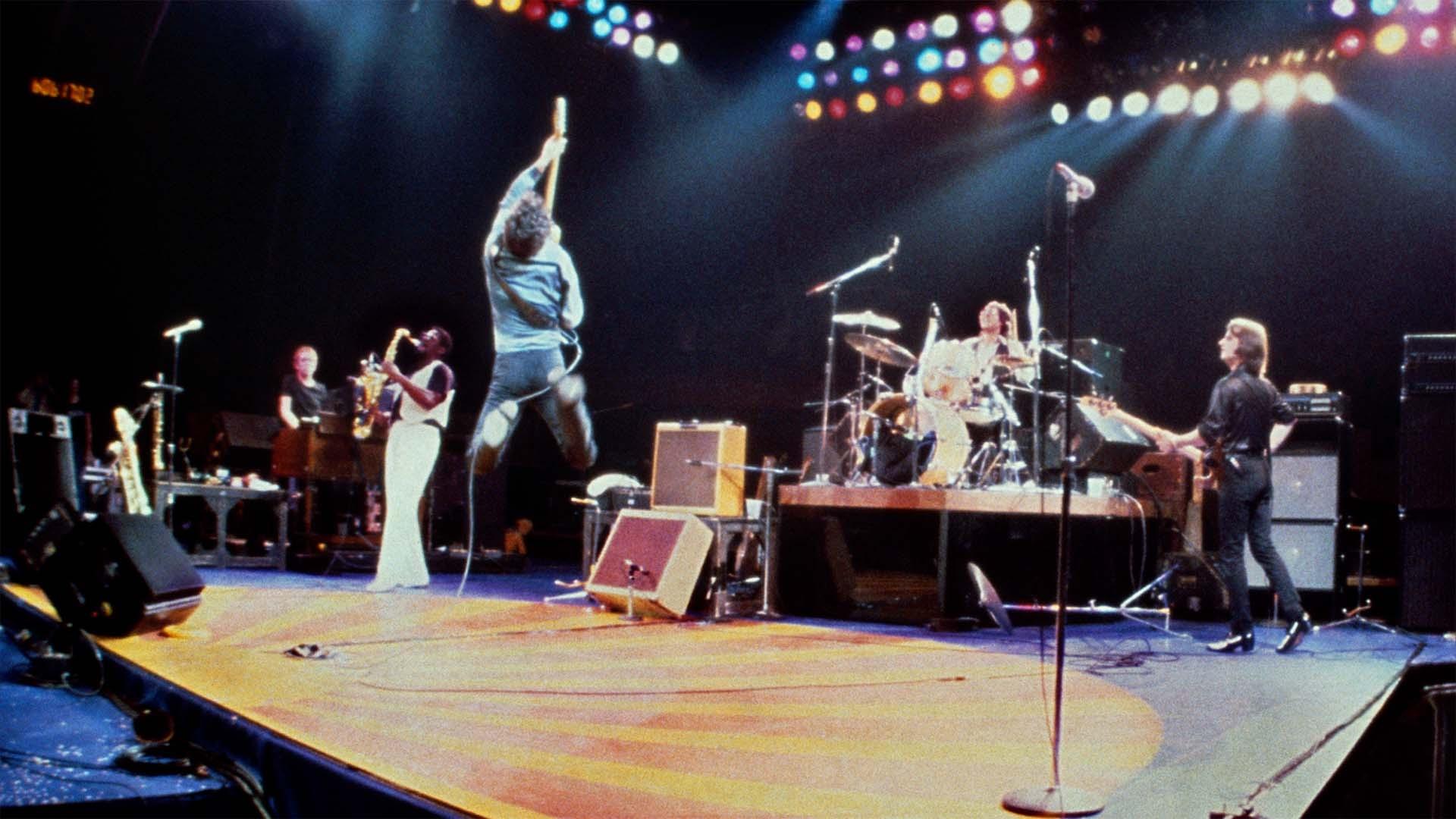
Bruce Springsteen and the E Street Band.
These concerts became their first officially filmed major concert appearances—capturing the band’s raw, marathon-length intensity at a moment when their reputation as the ultimate live act was still spreading mostly by word of mouth.
Legendary Performances and Unrepeatable Collaborations
One of the most powerful aspects of the No Nukes series was its sense of experimentation.
Artists frequently crossed into each other’s sets, creating spontaneous collaborations that never existed on tour and were never repeated in later years.
Among the most celebrated moments:
- Springsteen and the E Street Band tearing through the now-legendary “Detroit Medley”
- Cross-artist collaborations that blended folk, pop, and roots rock into something completely unique to this event
- A shared spirit of looseness and risk that felt closer to a musical summit than a tightly scripted concert series
These were not promotional appearances.
They were performances driven by urgency and conviction.
The Famous and Infamous Moments
No Nukes also produced some of the most talked-about stories in live rock history.
The “Broooce” incident
During Chaka Khan’s set, the crowd began rhythmically chanting “Bruce!” in anticipation of Springsteen’s upcoming appearance. The chant was mistaken as boos, and Khan reportedly left the stage frustrated—one of the most awkward and misunderstood moments of the entire series.
The live birth of “The River”
The No Nukes shows also marked the first public live performance of Springsteen’s future classic The River—a song that would soon become one of the defining pieces of his career and catalog.
The “Mellow Mafia”
Because of the overwhelming presence of high-profile singer-songwriters, the concerts were jokingly dubbed a gathering of the “Mellow Mafia”—a playful label that masked just how politically direct and socially motivated the entire project truly was.
Preserving the Legacy on Film and Vinyl
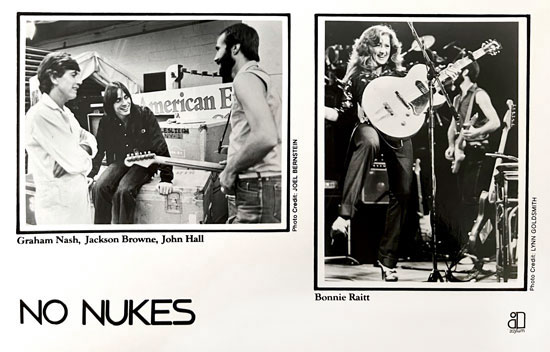
The impact of the concerts was preserved in two major releases that helped cement No Nukes as a permanent chapter in rock history.
The documentary film
The 1980 film
No Nukes, directed by Julian Schlossberg and Danny Goldberg, blended live performances with backstage footage and activist discussions.
Most notably, it introduced the wider public to Springsteen and the E Street Band in a full concert setting for the very first time.
The triple live album
The RIAA Gold-certified triple LP
No Nukes: The Muse Concerts for a Non-Nuclear Future preserved many of the series’ defining performances and collaborations and became a reference point for how benefit concerts could be documented and distributed.
A Complicated Chapter: Censorship and Exclusion
The political intensity of the No Nukes events extended well beyond the official messaging.
Peter Tosh performed during the concert series but was excluded from both the original album and film releases. His outspoken political statements, stage presentation, and controversial symbolism were viewed at the time as too provocative for mainstream distribution.
In hindsight, that exclusion has become a reminder that even within progressive movements, there were limits placed on which voices were considered “acceptable” for mass audiences.
A Blueprint for Music-Driven Activism
What separates No Nukes from countless later benefit concerts is not simply its star power.
It is the way the event integrated:
- direct political education
- artist-led organizing
- public rallies
- and sustained media presence
No Nukes did not treat music as decoration for a cause.
The music was the engine of the movement.
Decades before social media and viral campaigns, these concerts proved that artists could mobilize national attention through live performance alone.
Why Tonight’s Live Nuggets Radio Broadcast Matters
In an age of short clips and curated playlists, tonight’s Live Nuggets Radio Show presentation restores something rare: continuity.
Listeners will hear:
- how each night unfolded
- how the energy evolved from set to set
- how collaboration replaced competition
- and how the atmosphere of urgency shaped the performances
Tonight at 9PM EST, JamFest fans can step directly into September 1979 and experience the full arc of one of rock’s most ambitious live projects.
The JamFest Take
The No Nukes concerts were not just a reaction to a crisis.
They were a declaration—by some of the most influential artists in the world—that popular music could do more than entertain.
It could organize.
It could educate.
It could mobilize.
More than four decades later, No Nukes remains one of the most celebrated and historically important benefit concert series ever staged.
And tonight, thanks to Live Nuggets Radio, that legacy returns to the airwaves—one complete, uncompromised live experience at a time.
Tune in tonight at 9PM EST for the full No Nukes concerts—only on Live Nuggets Radio.