
NewGrass Radio Show | Six Hours of Nonstop Bluegrass, Every Week
There is a sound that lives somewhere between the mountains and the open sky, between the old country church and the late-night festival field, between a 78 rpm recording made in a Bristol, Tennessee studio in 1927 and a sold-out arena in Denver, Colorado in 2026. It is the sound of the American acoustic tradition in full conversation with itself across generations, and it is the sound that the NewGrass Radio Show was built to carry. Tonight, for six uninterrupted hours, that conversation continues on the JamFest signal, and we want to take you inside everything that makes this moment in bluegrass music one of the most exciting and consequential in the genre’s long and remarkable history.
NewGrass Radio is where tradition meets innovation in American roots music. The show celebrates the full spectrum of bluegrass, from the high-lonesome sound of the genre’s founding legends to the adventurous spirit of today’s newgrass pioneers. Each broadcast brings listeners a carefully curated mix of timeless classics, modern bluegrass hits, and the progressive experiments that are reshaping the sound for a generation that has never known a world without the internet but still finds itself reaching for a banjo at 2:00 in the morning because something in the music calls to them that nothing else does. Whether it is the driving banjo rolls of Bill Monroe’s era, the groundbreaking artistry of Alison Krauss, or the boundary-pushing creativity of artists like Béla Fleck, the Punch Brothers, and Billy Strings, NewGrass Radio bridges the past, the present, and the future of bluegrass in a way that no single playlist or streaming algorithm can replicate. This is a journey through the heart of American musical history, and tonight the journey is six hours long.
For longtime fans who have been listening to bluegrass since before the term newgrass existed, and for newcomers who discovered the genre through a Billy Strings livestream or a Molly Tuttle album that appeared in a recommendation queue, NewGrass Radio is your front-row seat to the legends who built this music and the contemporary artists carrying it somewhere new. The door is open to everyone, and tonight, the news that surrounds the bluegrass world makes the broadcast feel even more connected to the living pulse of a scene that is growing, evolving, and earning serious institutional recognition in real time.
The IBMA Nominees Are Out: Bluegrass’s Biggest Night Gets Its Official Contenders
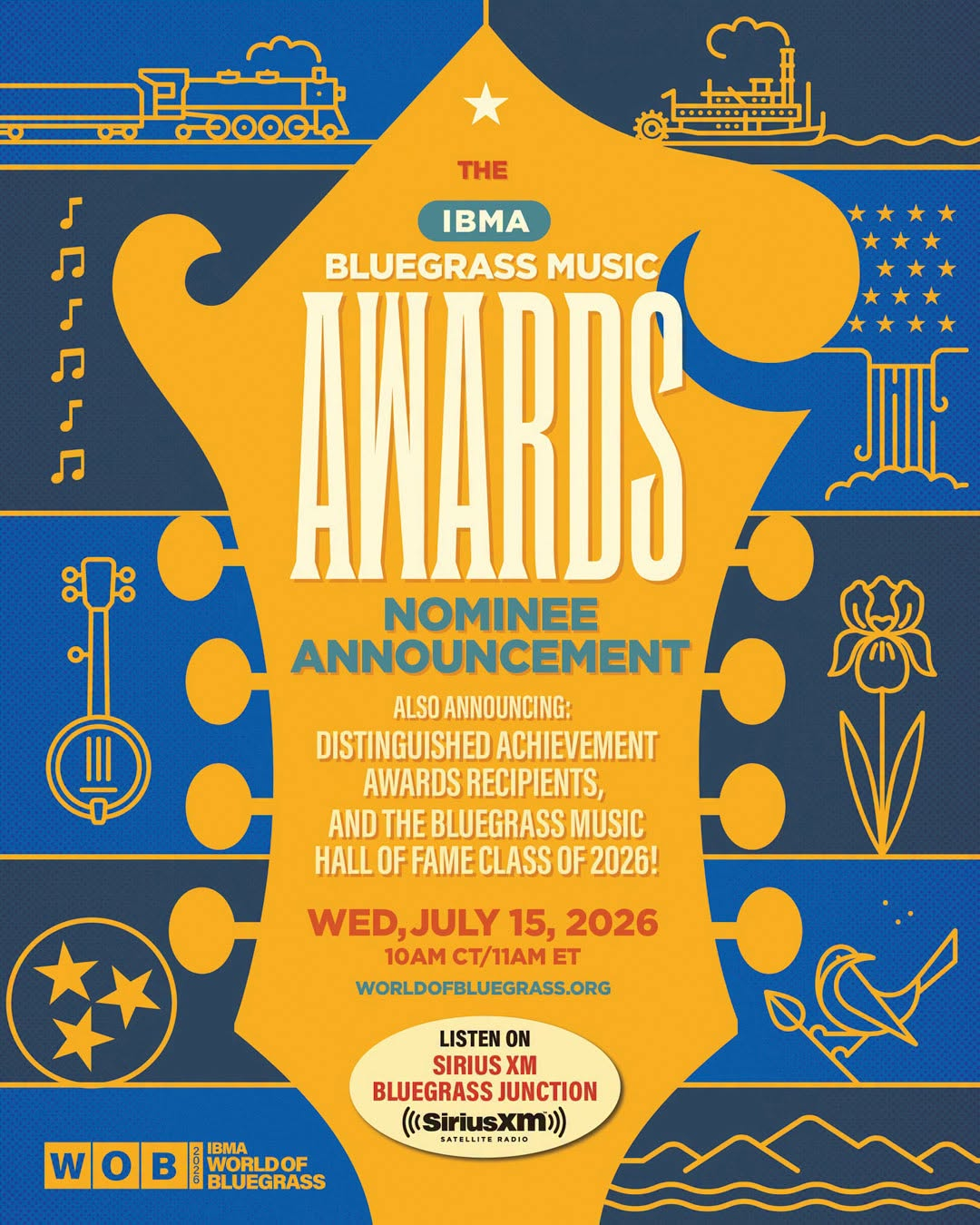
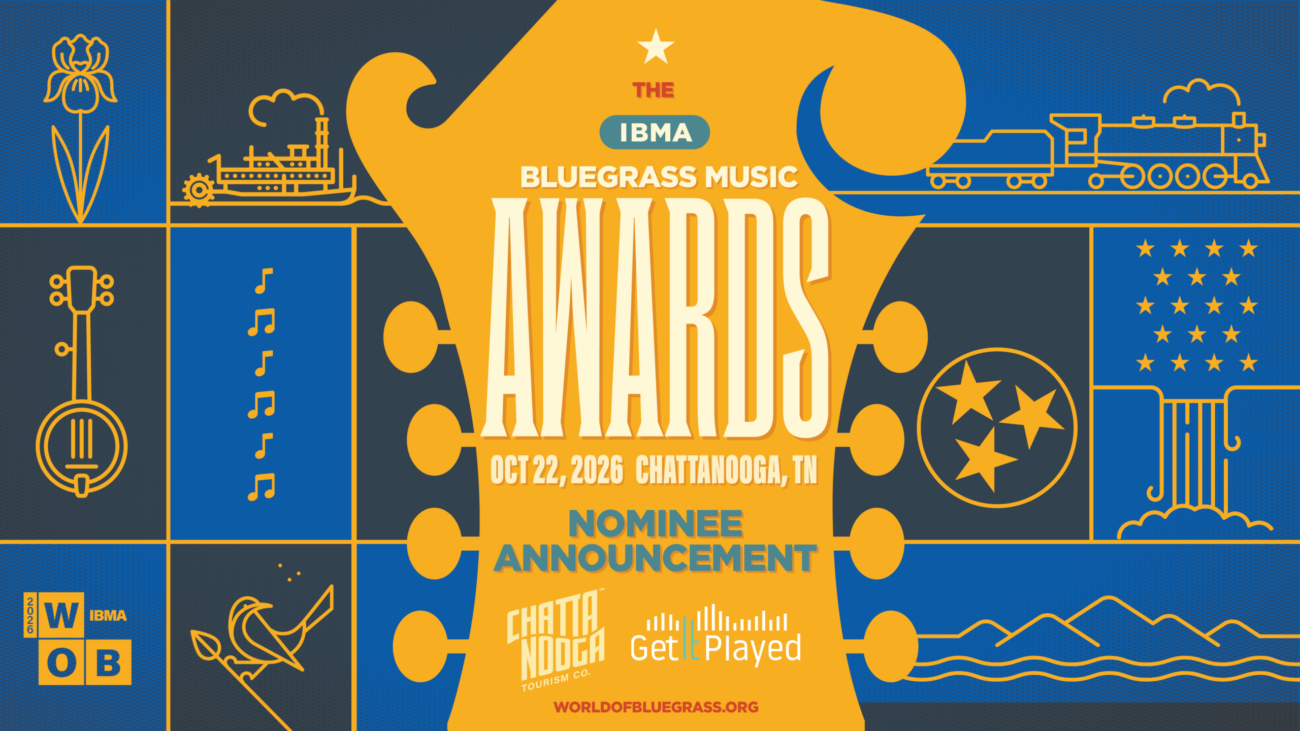
Five days ago, on July 15, 2026, the International Bluegrass Music Association made one of its most anticipated annual announcements, revealing the official nominees for the 37th Annual IBMA Bluegrass Music Awards during a live broadcast from the SiriusXM studios in Nashville. This is genuinely fresh news, and for anyone who loves this music and follows the conversations and careers and recordings that define its best work in any given year, the nominee list is the document that crystallizes what the bluegrass community has deemed most worthy of formal recognition across the previous twelve months.
The IBMA runs a multi-month nomination cycle each year, with initial submissions opening in the spring and an industry-facing second-round voting list circulating to professional members well before the public announcement. But the official nominees, the names that will be on the ballot when the bluegrass community casts its final votes and the awards are eventually handed out, were unveiled for the first time on July 15, making this week the real beginning of the awards conversation for the broader listening public. Understanding that distinction matters because it explains why the excitement around the announcements feels so concentrated and immediate right now. This is the moment when the nominees stop being rumor and industry speculation and become official, public, and real.
Among the most talked-about nominations is the Entertainer of the Year category, where the field includes Billy Strings, Alison Krauss and Union Station, and Sister Sadie. The presence of all three in the same category tells you a great deal about where bluegrass stands as a genre in 2026. Billy Strings represents the direction the music is traveling, the progressive, improvisationally charged, arena-filling phenomenon that has introduced more new listeners to acoustic roots music in the past five years than almost any other artist in the genre’s history. Alison Krauss and Union Station represent the standard of excellence against which everything in bluegrass has been measured for the better part of three decades, a combination of technical perfection, emotional depth, and commercial breakthrough that reshaped what country and bluegrass audiences would accept from each other. And Sister Sadie represents the best of what the traditional side of the genre continues to produce, tight harmonies and instrumental command rooted in the foundational values that Bill Monroe established and that successive generations of great bands have carried forward with devotion and skill.
The fact that these three acts share a ballot is a testament to how genuinely wide the bluegrass tent has become. There was a time, not very long ago, when the genre’s most devoted practitioners and its most commercially successful artists existed in separate conversations that only occasionally intersected at the IBMA ceremonies. That is no longer the case. Billy Strings winning awards from the same organization that honors Larry Sparks and Del McCoury and the Mountain Heart is not a contradiction. It is the clearest possible evidence that bluegrass has grown large enough and confident enough in its own identity to hold all of these expressions within a single community without requiring any of them to compromise what makes them distinct.
The broader nominee list across all categories reflects this same expansive quality, and we will be following the awards cycle closely here at JamFest as the voting progresses toward the eventual ceremony. Tonight’s NewGrass Radio broadcast will feature music from nominees and veterans and newcomers alike, because that is what the show has always done: put the whole tradition in conversation with itself and let the music tell its own story.
Carly Pearce Returns to Her Bluegrass Roots: “What If You Loved Me” and What It Means
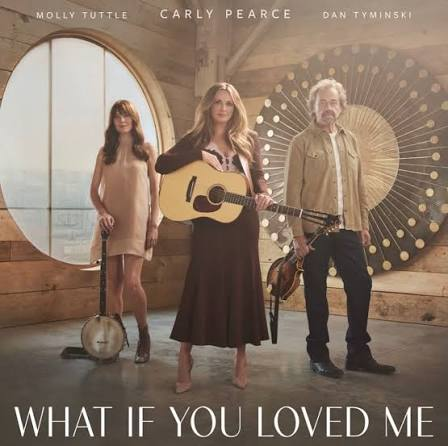
Three days ago, on July 17, 2026, something happened in the overlap between country music’s commercial mainstream and the bluegrass world that deserves more attention and more careful consideration than a typical new-release notice can provide. Carly Pearce released “What If You Loved Me,” a new roots track that features two of the most respected names in contemporary bluegrass, Dan Tyminski and Molly Tuttle, and in doing so made a statement about where she comes from that is worth taking seriously on its own terms.
Pearce is a Grammy-winning country artist whose commercial profile places her firmly in the Nashville mainstream, a world of radio formats and streaming metrics and major label support that operates at some distance from the festival fields and listening rooms where the bluegrass community typically gathers. But her musical roots run deep into the acoustic tradition, and “What If You Loved Me” is not a calculated genre crossover designed to capture a demographic. It is an artist going home, reaching for the sound that shaped her, and bringing along two collaborators whose credentials in that sound could not be more impeccable.
Dan Tyminski’s voice is one of the most distinctive in all of American roots music. Even listeners who may not immediately recognize his name will almost certainly recognize his voice, because it is the voice that George Clooney’s character lip-synced to in the film O Brother, Where Art Thou, a performance that introduced millions of people to the high-lonesome sound of Appalachian music in a way that no amount of festival programming or radio airplay had managed to accomplish. His work with Alison Krauss and Union Station over more than two decades has set a standard for ensemble playing and vocal integration that the bluegrass world measures itself against, and his presence on Pearce’s new track is not simply a guest credit. It is a musical endorsement of the sincerity behind what she is doing.
Molly Tuttle’s presence completes a collaboration that represents three very different points on the spectrum of where this music lives and how it is being carried forward. Tuttle’s career has been one of the genuinely exciting trajectories in contemporary Americana and roots music, from her early recognition as one of the most technically gifted flatpicking guitarists of her generation through her IBMA awards and into a solo career that has demonstrated compositional range and artistic ambition alongside the instrumental mastery that first drew attention to her. She brings to “What If You Loved Me” a perspective that is simultaneously traditional and forward-looking, which is exactly what the song seems to require.
For the NewGrass Radio audience, “What If You Loved Me” is worth listening to not just as a new release but as a data point in the ongoing conversation about what bluegrass and country and Americana mean to each other and how those conversations shift over time. The genre boundaries that once felt fixed and policed are increasingly porous in ways that serve the music, and a Carly Pearce bluegrass track featuring Tyminski and Tuttle is one of the more elegant recent examples of that permeability.
Daniel Grindstaff and The Uptown Troubadours Make the Opry: A Debut Worth Celebrating
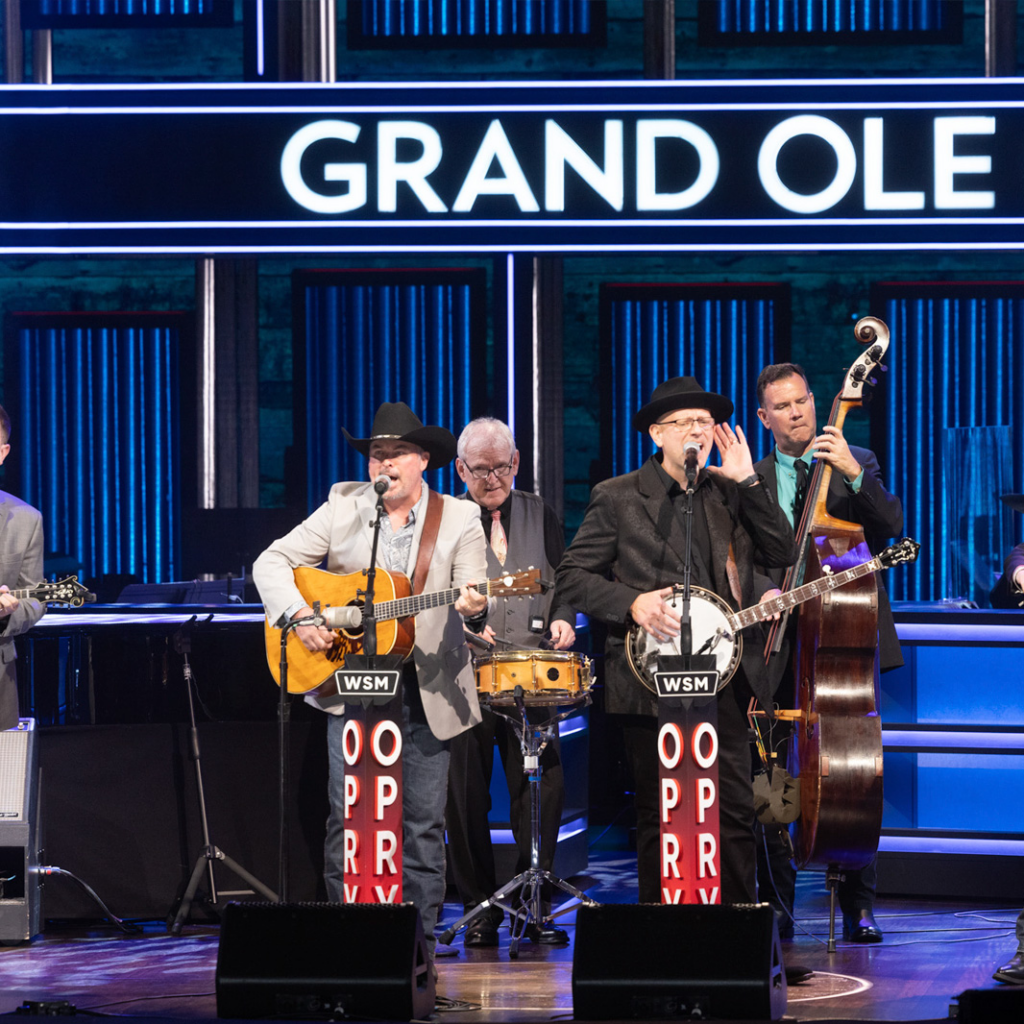
On the same evening that the IBMA announced its 2026 Award nominees, July 15, 2026, something else happened in Nashville that carries its own weight in the broader story of traditional American roots music. Daniel Grindstaff and The Uptown Troubadours made their official debut performance as featured stars at the Grand Ole Opry, stepping onto one of the most historically significant stages in American music for the first time and taking their place in a lineage that stretches back nearly a century.
The Grand Ole Opry is not simply a prestigious venue or a well-known radio broadcast. It is the institution that more than any other single entity shaped what country and roots music would become in America during the twentieth century. The Opry stage has hosted virtually every significant figure in the history of American acoustic music, from Hank Williams and Patsy Cline through Roy Acuff and Minnie Pearl and Bill Monroe himself, and the tradition of debut performances carries a specific weight in the culture of Nashville and the broader roots music community that outsiders sometimes underestimate. To step onto that stage for the first time as a featured act is to enter into the conversation of American musical history in the most direct and tangible way the Nashville world knows how to offer.
Grindstaff and his band bring to the Opry stage the kind of musicianship and devotion to craft that the institution has always honored, and their debut on a night when the IBMA was simultaneously announcing its annual awards nominees created a particular resonance. The bluegrass and roots music community was paying close attention to Nashville on July 15, and the Grindstaff Opry debut arrived in that context as a reminder that the tradition being celebrated in the awards cycle is not an abstraction. It is a living practice carried forward by working bands who are earning their moments on great stages through years of patient, serious artistic development.
We celebrate this debut on the NewGrass Radio Show because it is exactly the kind of story this broadcast exists to tell, the story of artists who love this music deeply enough to dedicate their careers to it and who eventually earn the recognition that serious dedication to a great tradition produces.
The Foundation: Understanding Where Bluegrass Comes From and Why It Still Matters
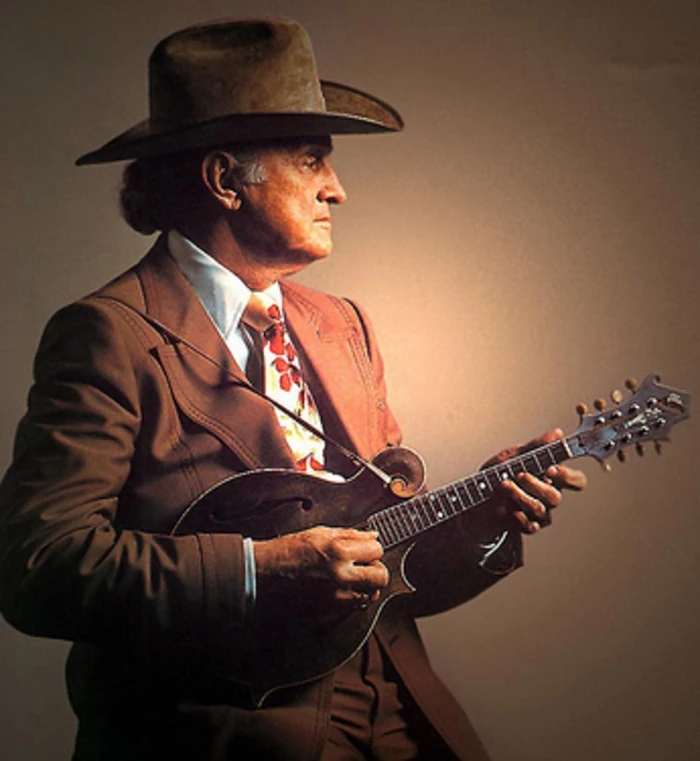
For listeners who are finding their way into bluegrass for the first time through tonight’s NewGrass Radio broadcast, whether they arrived here through a Billy Strings recommendation or a Carly Pearce track or simply by stumbling into the JamFest signal on a Saturday night and finding something in the music that made them want to know more, it is worth spending some time with the history that makes all of these contemporary stories meaningful.
Bill Monroe was a mandolinist and singer from Rosine, Kentucky who in the mid-1940s assembled a group of musicians around him that included guitarist and vocalist Lester Flatt and banjo player Earl Scruggs, and what they created together was something genuinely new in American music. Monroe took the fiddle traditions of Appalachian folk music, the blues he had absorbed from the Black musicians he worked alongside and listened to throughout his youth, the rhythmic drive of jazz, and the emotional directness of gospel, and he synthesized them into a new idiom that was faster, harder, more harmonically sophisticated, and more demanding of its performers than anything in the existing acoustic folk tradition. He called his band the Blue Grass Boys, after his home state of Kentucky, and the name eventually gave the genre itself its name.
What Scruggs contributed was as important as anything Monroe brought to the synthesis. The three-finger banjo roll that Scruggs developed and perfected, the technique of using the thumb and the first two fingers of the right hand to create a cascading, continuous melodic pattern across the strings, transformed the banjo from a rhythm instrument into one of the most powerful melodic voices in American music. Before Scruggs, nobody played the banjo the way he played it. After Scruggs, the three-finger roll became the defining technical foundation of the entire genre.
Lester Flatt and Scruggs eventually left Monroe to form their own group, the Foggy Mountain Boys, and the friendly competition between Monroe’s Blue Grass Boys and Flatt and Scruggs’s band defined the first generation of the music. The Stanley Brothers, Carter and Ralph, brought a more haunted, deeply Appalachian quality to the tradition, and Ralph Stanley’s baritone voice became one of the most celebrated in American music, a sound that seemed to carry the weight of old mountains and old sorrows in ways that defied easy explanation.
The next great development in the tradition came in the early 1970s when a generation of younger musicians began asking what would happen if you brought the improvisational freedom of jazz and the amplified energy of rock into conversation with Monroe’s foundational innovations. Sam Bush on mandolin, Tony Rice on guitar, and the collective project of the New Grass Revival were the primary agents of this transformation, and the music they made was genuinely revolutionary in the specific sense that it built on the tradition while refusing to be constrained by it. The term newgrass emerged from this moment, and it describes not simply a stylistic departure but an attitude toward the music: the belief that the tradition is a resource to be engaged with creatively rather than a set of rules to be followed faithfully.
Béla Fleck, who came to widespread attention through his work with the New Grass Revival before embarking on a solo career that took the banjo into jazz, classical, and world music contexts that Monroe could not have imagined, became the most important figure in demonstrating how far the instrument and the tradition could travel without losing their essential identity. The Punch Brothers, led by Chris Thile, applied a compositional ambition to string band music that drew on the entire Western classical tradition alongside the bluegrass lineage, producing records of extraordinary complexity and emotional depth. And then Billy Strings arrived and demonstrated that you could take all of that accumulated tradition, all of those decades of expansion and experimentation, and channel it through a live improvisational intensity that filled arenas.
Alison Krauss stands somewhat apart from this trajectory without being separate from it. Her emergence in the early 1990s as a vocalist and fiddle player of extraordinary grace and precision represented a different kind of expansion for the genre, one that prioritized beauty and emotional restraint over technical fireworks and that eventually built a bridge between bluegrass and mainstream country that changed the commercial landscape for acoustic music in ways that are still being felt. Her work with Union Station, and particularly her collaborations with Robert Plant, demonstrated that the qualities at the heart of great bluegrass, the clarity of tone, the depth of feeling, the sense that every note is earning its place in the music, translated across any genre they were brought into.
This is the tradition that the NewGrass Radio Show carries forward every week, and it is the tradition that the 2026 IBMA Award cycle is celebrating and debating and measuring in real time right now. Tonight’s six hours of nonstop bluegrass music are a small contribution to the ongoing life of something genuinely important, and we are grateful to be part of it.
The NewGrass Radio Show: Six Hours of Music Without Rules

The phrase that defines the NewGrass Radio Show, Music Without Rules, is worth unpacking because it is not a rejection of tradition. It is a statement about what makes the bluegrass and newgrass tradition unique in American music, the fact that the genre has always been defined by extraordinary technical standards and deep reverence for its founding vision alongside a restless, curious, improvisational spirit that refuses to accept that what has been done is the limit of what can be done.
Bill Monroe had rules. Strict ones. He had specific ideas about tempo and harmony and the role of each instrument in the ensemble, and he enforced those ideas with the authority of a founder who knew exactly what he was trying to create. But he also improvised. He listened to his bandmates and responded to what they played. He adapted the songs of other traditions, the blues and the gospel and the old-time fiddle tunes, and made them into something new. The rules he kept were the rules that served the music. The ones that did not serve the music, he did not keep.
That is the spirit of Music Without Rules on the NewGrass Radio Show. We play Bill Monroe because his music is magnificent and foundational and still capable of surprising a listener who has heard it a hundred times. We play Alison Krauss because her voice and her musicianship represent the highest standard of what bluegrass can achieve when it operates within its own tradition at full depth. And we play Billy Strings and the Punch Brothers and Béla Fleck and Molly Tuttle and Sierra Hull and Lindsay Lou and all of the artists who are extending the tradition right now, because the music without those artists would be a museum exhibit rather than a living art form.
Six hours of nonstop bluegrass means six hours of that full conversation, from the oldest recordings to the newest releases, from the most strictly traditional arrangements to the most adventurous improvisational excursions. It means tonight’s broadcast will take you from the Stanley Brothers to Sister Sadie to a live Billy Strings set in the same uninterrupted flow, because that is how the tradition actually works when you listen to it honestly. It is not a series of separate eras that replace each other. It is an accumulating, layered, living thing that carries its entire history forward with it into every new performance.
The 2026 IBMA Award nominees, announced five days ago, are the people and bands and recordings that the bluegrass community has identified as the best expressions of that living tradition in the past year. Carly Pearce’s new collaboration with Dan Tyminski and Molly Tuttle is evidence that the tradition reaches further than its formal boundaries, touching artists who were shaped by it even when their careers took them elsewhere. And the Grand Ole Opry debut of Daniel Grindstaff and The Uptown Troubadours is a reminder that the tradition is being actively replenished by artists who are choosing it, with full knowledge of everything that choice entails, because they believe in it and because they are good enough to honor it.
That is the world the NewGrass Radio Show broadcasts from, every single week, for six hours at a time. It is one of the richest and most deeply rooted corners of the American musical landscape, and it is having, right now in 2026, one of the most exciting moments in its long history. We are glad you are here for it.
Tune in tonight. The music is already playing.
JamFest | NewGrass Radio Show, six hours of nonstop bluegrass music every week. Traditional artists and Music Without Rules: from the founding legends to the newgrass pioneers, the full spectrum of one of America’s greatest musical traditions, broadcasting live and in love with every note.