
Feature · Awards · New Orleans & Louisiana
Louisiana Rules the Roots: New Orleans Takes Three of Five Regional Roots Nods as Clifton Chenier Earns Two More Grammy Nominations
From Dumpstaphunk’s first ever nomination to a Smithsonian salute to the King of Zydeco, the 69th Grammy Awards ballot reads like a love letter to Louisiana, with Jon Batiste, PJ Morton, Sullivan Fortner, Samantha Fish, and Lucinda Williams joining the celebration.
Tonight on JamFest Radio
NOLA style music all night long, from Dixieland to funk
Every year, the Grammy nominations offer a snapshot of where American music is headed, and every so often they also remind us where it came from. The nominees for the 69th Annual Grammy Awards, announced in November ahead of the February 7, 2027 ceremony, do both at once, and they point unmistakably toward Louisiana. New Orleans artists claimed three of the five slots in the Best Regional Roots Music Album category, the late zydeco king Clifton Chenier earned two archival nominations for a landmark Smithsonian box set, and a long roster of Louisiana born and based musicians, from Jon Batiste and PJ Morton to Samantha Fish and Lucinda Williams, landed nods across jazz, R&B, gospel, blues, and Americana.
For a state whose largest city is universally regarded as the birthplace of jazz, it is a fitting reminder that Louisiana’s musical well is as deep as ever. And on a Friday night like this one, there is no better way to celebrate than with the music itself. Tonight, What is Hip?! fills the airwaves with NOLA style music all night long on JamFest Radio.
Three Crescent City Acts in One Category
The Best Regional Roots Music Album category honors the distinctive musical traditions that grow out of particular places and communities across the United States, from zydeco and Cajun music to Hawaiian, Native American, and Gullah traditions. In most years, Louisiana claims a nominee or two. This year, New Orleans alone accounts for three of the five, a near sweep that has the city’s music community buzzing. The remaining two slots belong to Charleston’s Gullah inspired ensemble Ranky Tanky, nominated for This Village, and the Tongva Ensemble, nominated for Tongva Songs We Are Here Ekwa Chem, an album rooted in the Indigenous traditions of the Los Angeles basin.
Dumpstaphunk, the deep groove funk band co-led by Ivan Neville and Ian Neville alongside bassist Tony Hall, earned the first Grammy nomination of its career for Live at Tipitina’s 2025. The Nevilles are, of course, New Orleans musical royalty, part of the extended family behind the Neville Brothers and the Meters, and Dumpstaphunk has spent two decades carrying that legacy forward with a heavy, joyous sound built around its famously muscular rhythm section. The nomination carries a historic footnote of its own. The album was first issued through the Tipitina’s Record Club subscription series, making it the first Grammy nominated release in the history of the legendary Uptown club, the beloved venue named for Professor Longhair’s classic song and long regarded as the heart of New Orleans live music.
Robin Barnes, the vocalist affectionately known around town as the “Songbird of New Orleans,” received the first Grammy nomination of her career for Louisiana Love. Barnes has spent years enchanting audiences in the city’s clubs and festival stages with a warm, sparkling voice that moves easily between traditional jazz, soul, and pop, and the nomination is a richly deserved national spotlight for one of the Crescent City’s most beloved entertainers.
The Rumble featuring Big Chief Joseph Boudreaux Jr. earned its third career nomination for Ain’t No Dying, the band’s second full length studio album. Fronted by Boudreaux, a Big Chief in New Orleans’s Black Masking Indian tradition and the son of the legendary Big Chief Monk Boudreaux, The Rumble fuses the chants and rhythms of Mardi Gras Indian culture with hard hitting funk, brass, and soul. Few bands better capture the living, evolving spirit of New Orleans street culture, and the band’s steady stream of Grammy recognition shows just how far that sound now travels.
The King of Zydeco, Honored Again
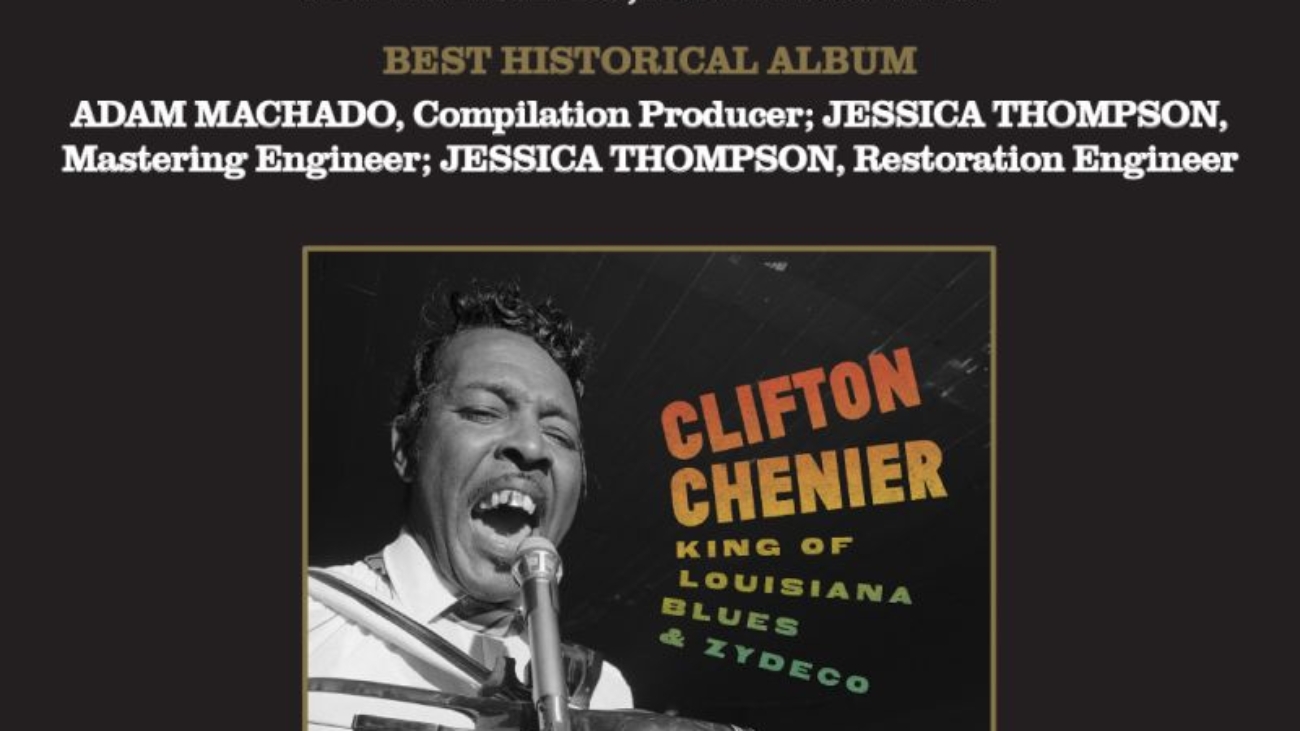
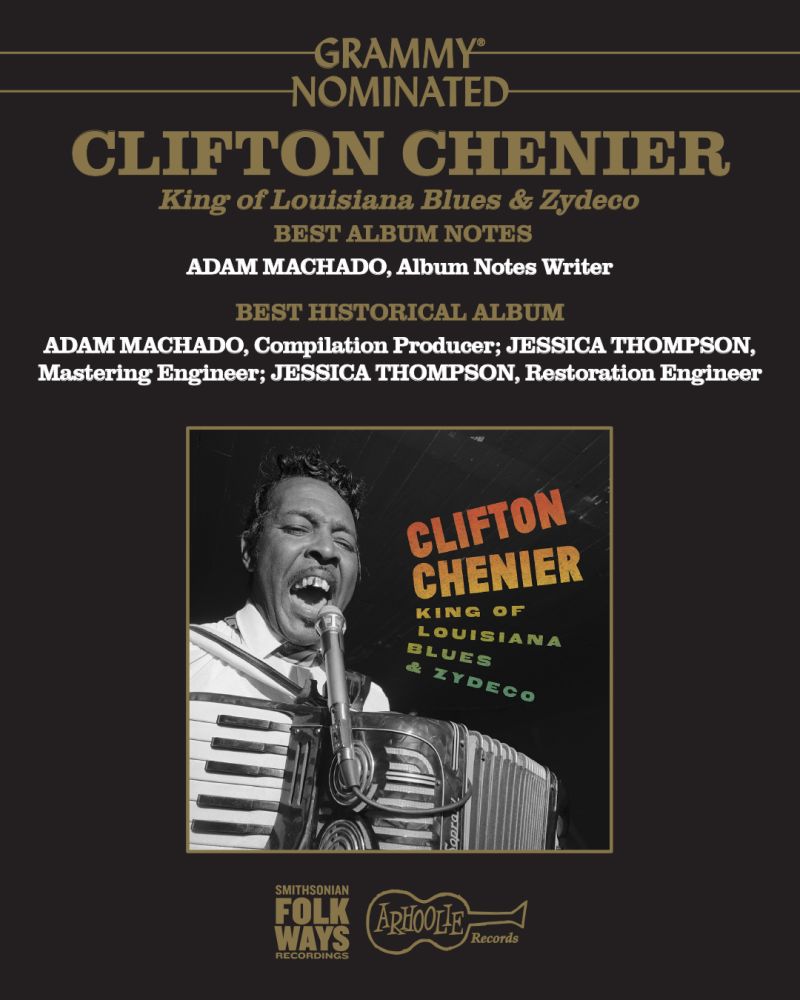
The other great Louisiana story on this year’s ballot belongs to a musician who passed away nearly four decades ago. Clifton Chenier: King of Louisiana Blues & Zydeco, a sweeping 4 CD and 6 LP retrospective from Smithsonian Folkways Recordings, earned two nominations, for Best Historical Album and Best Album Notes. The set holds a special place in recording history as the first Arhoolie release issued under the Smithsonian Folkways banner, uniting the catalog of the pioneering independent label that championed Chenier for decades with the national museum’s celebrated record label.
Born near Opelousas, Louisiana, in 1925, Clifton Chenier took the French speaking Creole music of rural southwest Louisiana, plugged it into the rhythms of rhythm and blues, and created the modern sound of zydeco, roaring through dance halls with his piano accordion and his brother Cleveland on the rubboard. He toured the world, wore a crown on stage, and in 1984 became the first zydeco artist to win a Grammy Award. More than any other musician, he gave zydeco its royal identity, and his influence can be heard in every accordion player who has followed him.
4 CD and 6 LP retrospective · Smithsonian Folkways Recordings · The first Arhoolie release under the Smithsonian Folkways banner
The Best Historical Album nomination recognizes compilation producer Adam Machado and mastering and restoration engineer Jessica Thompson, whose painstaking work brings Chenier’s recordings to life with remarkable clarity. Among the treasures included are three archival tracks drawn from the New Orleans Jazz & Heritage Archive’s Ice Cube Slim collection, a lovely local connection. Machado is also nominated for Best Album Notes for the set’s 160 page companion book, which features additional essays by Nick Spitzer, the folklorist and longtime host of public radio’s American Routes, and Herman Fuselier, the Louisiana music writer and broadcaster, along with a moving personal remembrance from Chenier’s son, the accordionist C.J. Chenier, who has carried his father’s band and legacy forward for decades.
Louisiana Across the Ballot
Beyond the roots and historical categories, Louisiana artists turn up throughout the 69th Grammy ballot, as detailed by New Orleans’s own WWOZ. In jazz and classical, Kenner native Jon Batiste earned four nominations for Monk Movements, Monk Meditations, Black Mozart, and “In Walked Bud,” a remarkable showing that reflects his deep engagement this year with the music of Thelonious Monk and the classical tradition. New Orleans pianist Sullivan Fortner, one of the most admired accompanists and soloists in modern jazz, earned a nod for Leave That In There, and New Orleans born vocalist Ledisi was recognized for For Dinah, her tribute to the great Dinah Washington.
- Jon Batiste · four nominations
- Sullivan Fortner · Leave That In There
- Ledisi · For Dinah
- PJ Morton · four nominations
- Tank and the Bangas · The Last Balloon
- Sean Ardoin · Zydeco Trailrides and Southern Soul
- Samantha Fish · Paper Doll (Live)
- Lucinda Williams · World’s Gone Wrong
In R&B and gospel, New Orleans singer, songwriter, and producer PJ Morton earned four nominations across both genres, continuing a run that has made him one of the most decorated Louisiana artists of his generation. Tank and the Bangas, the irrepressible New Orleans collective that first won hearts nationwide through NPR’s Tiny Desk Contest, received a nod for Best Progressive R&B Album for The Last Balloon.
The blues and Americana categories carry a strong Louisiana accent as well. Southwest Louisiana zydeco artist Sean Ardoin, with Kreole Rock and Soul featuring Mr. Sipp, was nominated for Best Traditional Blues Album for Zydeco Trailrides and Southern Soul, a fitting companion to the Chenier box set and proof that zydeco’s next generation is thriving. New Orleans based guitarist and singer Samantha Fish earned a Best Contemporary Blues Album nod for Paper Doll (Live), and Lake Charles native Lucinda Williams, one of the most revered songwriters in American music, was nominated for Best Americana Album for World’s Gone Wrong.
Why Louisiana Keeps Winning
It is no accident that a single state can fill so much of the Grammy ballot. Louisiana’s music grows out of an extraordinary cultural crossroads, where African, Caribbean, French, Spanish, Creole, Cajun, and Native traditions have mixed for three centuries. That meeting of cultures produced jazz in New Orleans, zydeco and Cajun music on the southwestern prairies, rhythm and blues, funk, brass band music, and the chants of the Mardi Gras Indians, and it continues to produce astonishing musicians today. Institutions like Tipitina’s, WWOZ, the New Orleans Jazz & Heritage Archive, and countless neighborhood clubs keep that tradition alive and passing from one generation to the next.
The winners will be revealed on February 7, 2027, and the complete list of nominees in every category is available through the Recording Academy, with additional details on the regional roots field on the category page. Whatever happens that night, Louisiana has already won the argument about where America’s roots run deepest.
Tonight: What is Hip?!
There is no better way to toast this year’s Louisiana nominees than by listening to the music of the place that made them. Tonight on JamFest Radio, What is Hip?! serves up NOLA style music all night long. New Orleans is famously associated with jazz and is universally considered the birthplace of the genre, and its earliest form was Dixieland, the joyful ensemble style also known as traditional jazz, New Orleans jazz, or simply “New Orleans.” From those early brass and clarinet led bands to the funk, R&B, and second line grooves that followed, tonight’s program celebrates the full sweep of the Crescent City sound. Turn it up, grab a handkerchief, and let the good times roll.