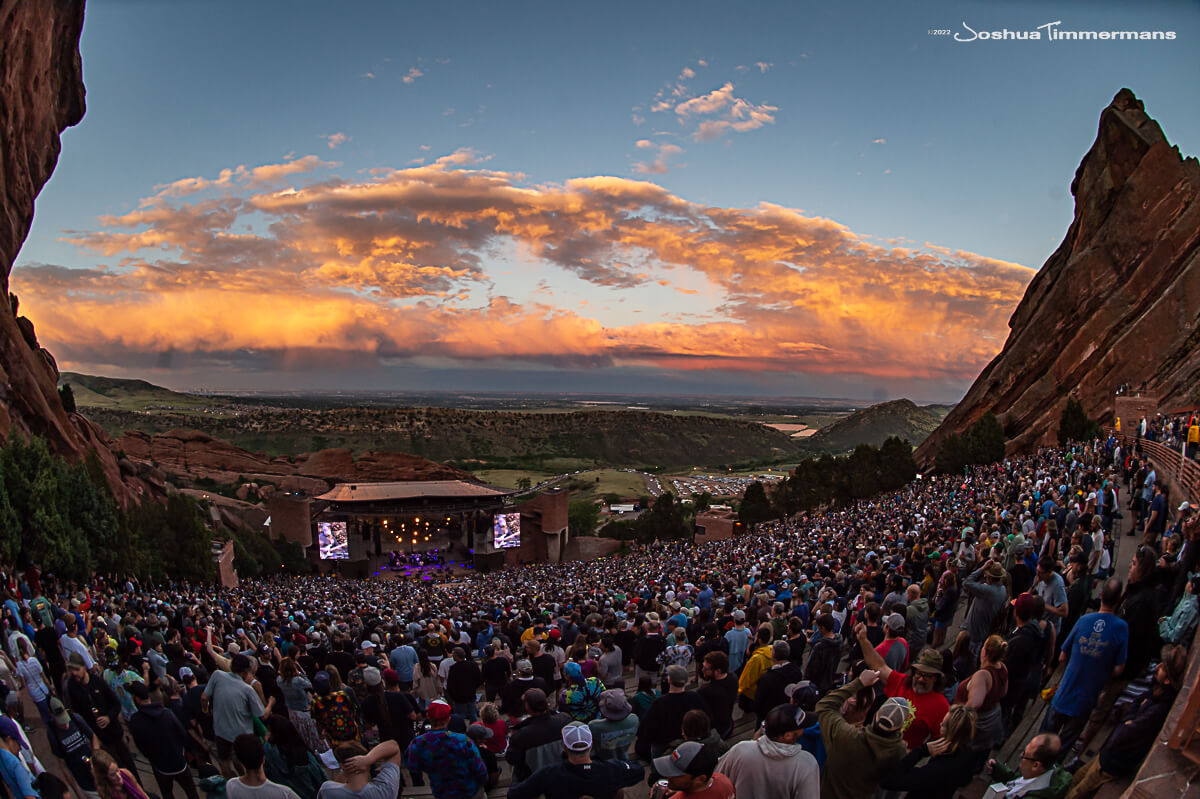
Live Nuggets on JamFest Tonight is the Night Widespread Panic Turned Red Rocks Into a Piece of Music History

 DJ Don Edwards
There are great concerts, there are legendary concerts, and then there are performances that transcend the normal boundaries of live music altogether. These are the rare nights that become woven into the fabric of a band’s identity and eventually take on a life of their own within the collective memory of a fan community. For Widespread Panic, June 30, 2002, at Red Rocks Amphitheatre occupies that rare territory. More than two decades later, the performance remains one of the most discussed, celebrated, and emotionally significant concerts in the history of the band, representing not only an extraordinary musical achievement but also a deeply human moment shared between musicians and fans confronting the realities of mortality, friendship, perseverance, and gratitude.
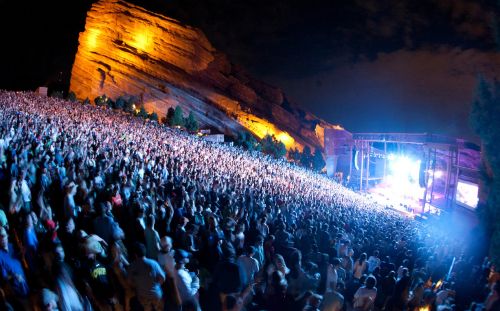
Tonight’s edition of the Live Nuggets Radio Show, airing at 9 PM EST, revisits this remarkable performance in its entirety, giving listeners an opportunity to experience one of the defining concerts of the modern jam-band era. Live Nuggets has always been dedicated to presenting complete concerts rather than isolated highlights, allowing audiences to experience the flow, emotion, and spontaneity that make live music so powerful. Few shows embody that philosophy more completely than Widespread Panic’s final night at Red Rocks during the summer of 2002.
To fully understand the importance of the performance, it is necessary to understand the circumstances surrounding it. Earlier that year, co-founding guitarist Michael “Mikey” Houser had been diagnosed with terminal pancreatic cancer. Houser was not simply another member of the band. He was one of the architects of the Widespread Panic sound, a guitarist whose unique phrasing, melodic instincts, and understated brilliance helped define the group’s identity from its earliest days. Rather than immediately stepping away from performing, Houser made the extraordinary decision to continue touring for as long as his health would allow. His determination to remain on stage alongside his bandmates became one of the most inspiring stories in live music.
By the time Widespread Panic arrived at Red Rocks for a three-night run at the end of June, fans understood they were witnessing something special. While no one could fully know how much time remained, there was a growing awareness throughout the community that every performance carried additional emotional weight. Red Rocks, already one of the most iconic venues in the world, became the setting for what would ultimately be Houser’s final appearance at the legendary Colorado amphitheater. He would perform only two more concerts after the Red Rocks run before passing away on August 10, 2002.
What makes the June 30 performance so remarkable is that it never feels defined by sadness. Instead, it feels like a celebration of everything that made Widespread Panic such a beloved live act. The concert captures a band operating with purpose, confidence, and an unmistakable sense of connection. The music itself remains the central focus throughout the evening, and from the opening notes it becomes clear that this is not a farewell performance in the conventional sense. It is a band doing what it has always done: taking the stage and delivering an unforgettable night of music.
The first set immediately establishes the tone. Widespread Panic opens with an expansive version of “Driving Song,” one of the band’s most enduring live vehicles. The performance moves seamlessly through a carefully crafted sequence that incorporates Vic Chesnutt’s “Aunt Avis” and the fan favorite “Tall Boy” before eventually returning to the original theme. The structure demonstrates one of the qualities that has always distinguished Widespread Panic from many of its peers. Their setlists often function less like collections of individual songs and more like interconnected journeys, where transitions, themes, and momentum become as important as the songs themselves.
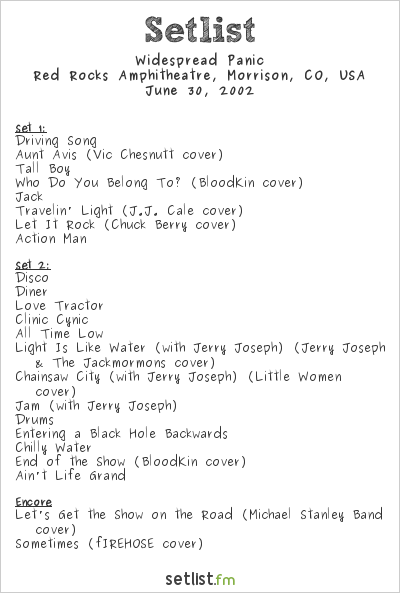
As the set unfolds, the band’s chemistry becomes impossible to ignore. Every member contributes to a collective sound that feels both relaxed and intensely focused. The performance continues building momentum through inspired renditions of J.J. Cale’s “Travelin’ Light” and Chuck Berry’s “Let It Rock,” two covers that highlight the band’s deep appreciation for American music traditions while showcasing their ability to reinterpret familiar material through their own improvisational lens. By the time the set concludes with a powerful “Action Man,” the audience has already experienced a masterclass in pacing, dynamics, and ensemble playing.
The second set raises the intensity even further. Opening with a continuous sequence built around “Disco,” “Diner,” and “Love Tractor,” the band settles into a groove-oriented approach that allows individual musicians to stretch while maintaining the cohesion that has always been central to the Panic sound. The performance reflects the confidence of a group that had spent years developing a unique musical language, one capable of moving effortlessly between Southern rock, blues, funk, jazz, and improvisational exploration.
One of the night’s
defining moments arrives when longtime collaborator Jerry Joseph joins the band on stage. Joseph’s relationship with Widespread Panic has produced countless memorable performances over the years, and his appearance at Red Rocks adds another layer of significance to an already emotional evening. Together they deliver powerful versions of Joseph’s compositions “Light Is Like Water” and “Chainsaw City,” the latter evolving into one of the most explosive performances of the entire concert. The collaboration highlights the mutual respect and creative chemistry that existed between Joseph and the band while providing some of the evening’s most adventurous improvisational moments.
As impressive as the music is throughout the show, the emotional centerpiece arrives during the encore. Returning to the stage alongside George McConnell and Randall Bramblett, the band delivers a sequence that many fans continue to regard as one of the most meaningful moments in Widespread Panic history. The decision to perform Michael Stanley Band’s “Let’s Get the Show on the Road” carries enormous emotional resonance given the circumstances surrounding Houser’s health. Without becoming sentimental or self-indulgent, the performance acknowledges the reality of the moment while remaining firmly rooted in the spirit of celebration that defined the entire evening.
The encore concludes with a blistering rendition of fIREHOSE’s “Sometimes,” bringing the weekend to a close in a manner that feels simultaneously triumphant and reflective. It is the kind of ending that only gains significance with time. What may have initially felt like the conclusion of a remarkable concert eventually became recognized as the closing chapter of an important era in the band’s history.
Part of what continues to make this performance resonate so strongly is the way it captures Widespread Panic at a pivotal crossroads. The band was confronting immense personal challenges while continuing to perform at an exceptionally high level. There is no sense of compromise in the music. No indication that the circumstances diminished the quality of the performance. If anything, the opposite appears true. The emotional gravity surrounding the show seems to have heightened everyone’s focus and commitment, resulting in a concert that feels unusually inspired even by Widespread Panic’s already high standards.
Over the years, the June 30, 2002, Red Rocks performance has become one of the foundational documents of jam-band culture. Fans frequently cite it among the greatest Panic shows ever performed. Its reputation has only grown as new generations discover the recording and gain a deeper appreciation for both its musical excellence and historical significance. The concert’s inclusion in the band’s Never Miss a Sunday Show archival series further solidified its status as an essential piece of live music history.
The enduring appeal of the performance also speaks to the broader power of live music itself. Great concerts are not simply collections of songs. They become snapshots of specific moments in time, preserving emotions, relationships, and experiences that might otherwise fade into memory. The best live recordings allow listeners to revisit those moments years later and reconnect with something larger than the music alone.
That philosophy sits at the heart of the Live Nuggets Radio Show. Every Tuesday night at 9 PM EST, the program presents a carefully selected complete concert that deserves to be experienced as a unified performance rather than a collection of individual tracks. In an era dominated by playlists, algorithms, and fragmented listening habits, Live Nuggets celebrates the art of the full concert experience. It reminds listeners that some performances are meant to be heard from beginning to end, allowing the story of the evening to unfold exactly as it did for the audience in attendance.
Tonight’s featured concert exemplifies that idea perfectly. Widespread Panic’s June 30, 2002, appearance at Red Rocks is more than a live recording. It is a testament to resilience, musicianship, friendship, and the enduring power of a band determined to make every moment count. More than twenty years later, it remains one of the defining performances of the jam-band era and a reminder of why certain concerts continue living on long after the final notes have faded into the Colorado night.