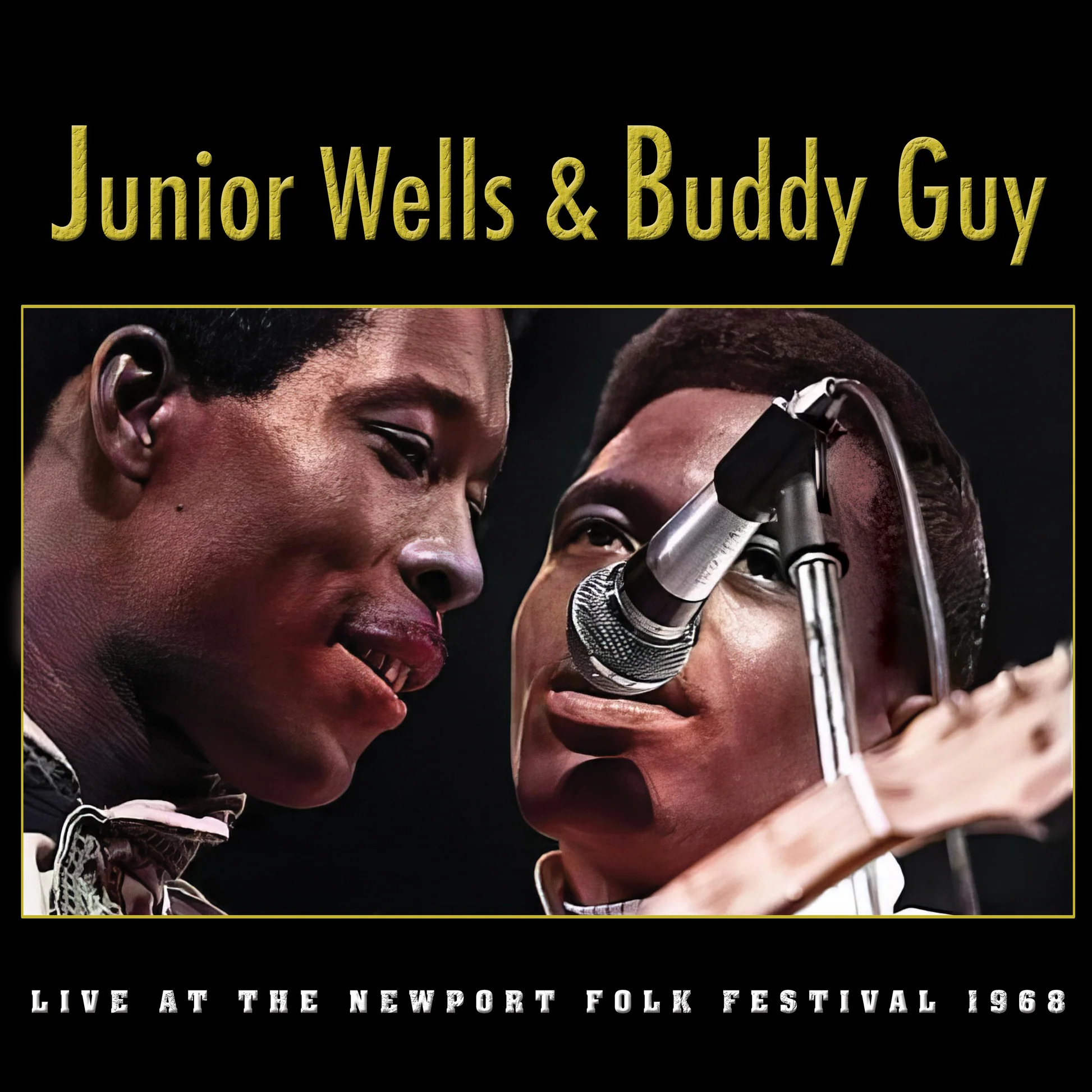
All Things Considered Live: Buddy Guy & Junior Wells Ignite the 1968 Newport Folk Festival

 DJ Don Edwards
JamFest Spotlight: Buddy Guy & Junior Wells Ignite the 1968 Newport Folk Festival in a Legendary Blues Performance
Live music has always been about electricity—the invisible current that passes between musicians and an audience when everything aligns perfectly. In the summer of 1968, that electricity surged through the Newport Folk Festival in Newport, Rhode Island, when two of the most influential blues artists of all time, Buddy Guy and Junior Wells, took the stage together for a performance that would become one of the defining blues moments of the era.
Now celebrated again through the All Things Considered Live Radio Show, this unforgettable concert gives listeners a rare chance to experience the raw power of blues music at one of the most historic festival gatherings in American music history. The broadcast captures a performance that perfectly illustrates how the blues evolved from regional tradition into a global musical force.
For JamFest readers and listeners alike, this historic recording is more than a vintage setlist—it is a living document of musical innovation, cultural energy, and the unmatched chemistry between two legendary performers.
The Newport Folk Festival: A Stage Where Music History Happens
Few festivals in the world have shaped the course of modern music as dramatically as the Newport Folk Festival. Since its earliest years, Newport has been a place where musical boundaries dissolve, genres intersect, and artists reveal new dimensions of their creativity.
By the late 1960s, the festival had already hosted groundbreaking performances from some of the most important musicians in American music. Blues, folk, jazz, and rock artists shared the same stage, creating a cross-pollination of sounds that influenced generations of performers.
When Buddy Guy and Junior Wells arrived in Newport on July 8, 1968, they represented the beating heart of Chicago blues—an electrified style that carried the emotional depth of Delta blues into the modern urban era.
What happened next was a performance that festival audiences would talk about for decades.
The Dynamic Partnership of Buddy Guy and Junior Wells
The chemistry between Buddy Guy and Junior Wells remains one of the most powerful partnerships in blues history.
Buddy Guy, born George Guy in Lettsworth, Louisiana in 1936, developed into one of the most revolutionary guitarists the blues world has ever seen. Raised on the music of pioneers like Lightnin’ Hopkins and T-Bone Walker, Guy absorbed their expressive phrasing before moving to Chicago, where the city’s electrified blues scene would shape his signature sound.
In Chicago, Guy studied and played alongside icons including Muddy Waters, Otis Rush, and Guitar Slim. From these influences, he forged his own style—one defined by explosive string bends, emotional intensity, and a fierce staccato attack that could slice through any mix.
His playing would eventually inspire a generation of guitar legends, including Jimi Hendrix, Eric Clapton, and Stevie Ray Vaughan, all of whom cited Guy as a foundational influence.
Standing beside him was Junior Wells, born Amos Wells Blakemore Jr., a master of blues vocals and harmonica.
Wells’ early life traced through Memphis and Arkansas before he too found his musical destiny in Chicago. By the age of nineteen, Wells had already been recruited into Muddy Waters’ band, replacing the legendary Little Walter.
While Wells was a powerful vocalist, his greatest influence came through the harmonica. He helped define the modern amplified Chicago blues harp style, transforming the instrument into a fierce, electrified voice capable of matching the intensity of electric guitar.
Together, Guy and Wells created something extraordinary: a blues partnership that blended fiery guitar work with soulful vocals and explosive harmonica improvisation.
Their stage presence was magnetic, and when they performed together, audiences knew they were witnessing something special.
The Band That Powered the Performance
Behind the two frontmen stood an equally formidable band that helped elevate the performance into legendary territory.
The rhythm section included Jack Myers on bass and Fred Below on drums, a pairing that delivered a driving groove capable of shifting seamlessly between traditional blues rhythms and jazz-influenced improvisation.
Adding another dimension to the sound was A.C. Reed on saxophone, effectively acting as a one-man horn section that injected bursts of melodic punctuation throughout the performance.
Together, this ensemble created a rich, layered sound that balanced improvisation with tight musical structure.
Opening the Set: “One Room Country Shack”
The performance began with a brief introduction by festival director George Wein, one of the architects of Newport’s musical legacy.
The band warmed up instrumentally before launching into “One Room Country Shack,” a song that immediately established the intensity of the evening.
Originally featured on Buddy Guy’s classic 1968 album A Man and the Blues, the song became the perfect opening statement for the set. Guy’s guitar roared with controlled ferocity while the band locked into a deep groove that set the stage for the musical fireworks that would follow.
The audience knew instantly they were in for something unforgettable.
Blues Firestorm: “Checkin’ On My Baby”
The momentum continued with “Checkin’ On My Baby,” a staple of the Chicago blues repertoire.
Junior Wells delivered powerful vocals while unleashing blistering harmonica lines that danced around Guy’s razor-sharp Stratocaster riffs. Each musical phrase felt like a conversation between the two musicians, their interplay pushing the energy higher with every chorus.
A.C. Reed’s saxophone added rhythmic accents that gave the arrangement a punchy, big-band feel rarely heard in traditional blues performances.
A Slow Burn: “Somebody Hoodooed The Hoodoo Man”
After the fiery opening numbers, the band shifted gears with “Somebody Hoodooed The Hoodoo Man,” a slow blues that allowed the musicians to stretch emotionally and dynamically.
Wells’ voice carried the storytelling weight of the song, while Guy’s guitar responded with soulful phrases that seemed to echo every lyric.
The slower tempo gave the audience a chance to absorb the emotional depth of the blues—an art form rooted in storytelling, struggle, and resilience.
A Signature Moment: “Messin’ With The Kid”
One of Junior Wells’ most iconic songs, “Messin’ With The Kid,” brought the set back to an explosive groove.
The song became a defining moment in the performance, highlighting the playful swagger and confidence that defined the Guy–Wells partnership.
Guy’s guitar punctuated every vocal line with stinging riffs, while Wells’ harmonica solos ignited waves of applause from the Newport crowd.
Extended Blues Improvisation: “Help Me”
As the set moved toward its climax, the band launched into a nearly nine-minute exploration of Sonny Boy Williamson’s “Help Me.”
This performance showcased the full improvisational power of the group.
Guy’s guitar soared into blistering solo territory while Wells responded with harmonica lines that twisted and turned through the band’s groove.
The extended jam revealed just how deeply this band could explore the blues without ever losing the emotional thread of the music.
Listeners today can clearly hear how performances like this shaped the next generation of blues-rock musicians, including Johnny Winter and artists connected to the Paul Butterfield Blues Band.
The Audience Demands More
By the time the final notes rang out, the Newport audience was electrified.
Festival director George Wein attempted to move the program along, but the crowd had other ideas. Cheers and howls echoed through the venue as fans demanded more music.
Recognizing the energy in the room, Wein finally relented and invited Guy, Wells, and the band back to the stage for an encore.
A Blues Encore for the Ages
The band returned with “Stormy Monday,” a slow blues classic that began delicately before exploding into one of Buddy Guy’s most dynamic guitar performances of the night.
In a moment of spontaneous humor, Guy quoted the traditional folk tune “Mary Had a Little Lamb” during one of his solos—a playful nod to the fact that they were performing at a folk festival.
But the real surprise came at the very end.
Just when it seemed the song was winding down, the band suddenly pivoted into a funky groove inspired by James Brown’s “I Got You (I Feel Good).”
The unexpected twist sent the Newport audience into a frenzy, transforming the final moments of the set into a joyous celebration that blurred the lines between blues, soul, and funk.
All Things Considered Live Radio Show: Bringing Legendary Performances to New Audiences
Today, listeners can experience this historic performance through the All Things Considered Live Radio Show, a weekly broadcast that celebrates the most powerful moments in live music history.
Designed for listeners of all ages, the show highlights concerts recorded by NPR Music at some of the most iconic venues and festivals in the world.
The program regularly features performances from:
Newport Folk Festival
SXSW (South by Southwest)
The 9:30 Club
And many other legendary stages
Each broadcast invites listeners to step into the atmosphere of a live performance, rediscovering the artistry, spontaneity, and energy that define great music.
For blues fans, the Buddy Guy and Junior Wells Newport performance stands as one of the most thrilling moments ever captured on a festival stage.
The Enduring Legacy of Buddy Guy and Junior Wells
More than half a century after this performance, the influence of Buddy Guy and Junior Wells continues to shape modern blues and rock music.
Guy remains one of the most celebrated living blues musicians, his guitar style still inspiring artists across genres.
Wells’ innovations on harmonica transformed the instrument into a centerpiece of electric blues, influencing countless musicians who followed.
Together, they created a partnership that captured the essence of Chicago blues—raw, emotional, improvisational, and electrifying.
Why Historic Festival Performances Matter
Festival performances often reveal artists at their most fearless.
Without the constraints of studio recording, musicians can stretch songs, interact with audiences, and take risks that lead to unforgettable musical moments.
The 1968 Newport Folk Festival performance by Buddy Guy and Junior Wells is a perfect example.
It is blues at its most powerful—spontaneous, emotional, and alive.
For JamFest readers and listeners discovering this performance today through All Things Considered Live, the message is clear:
Some concerts are not just performances.
They are moments in music history that continue to resonate across generations, reminding us why live music remains one of the most powerful experiences in the world.