
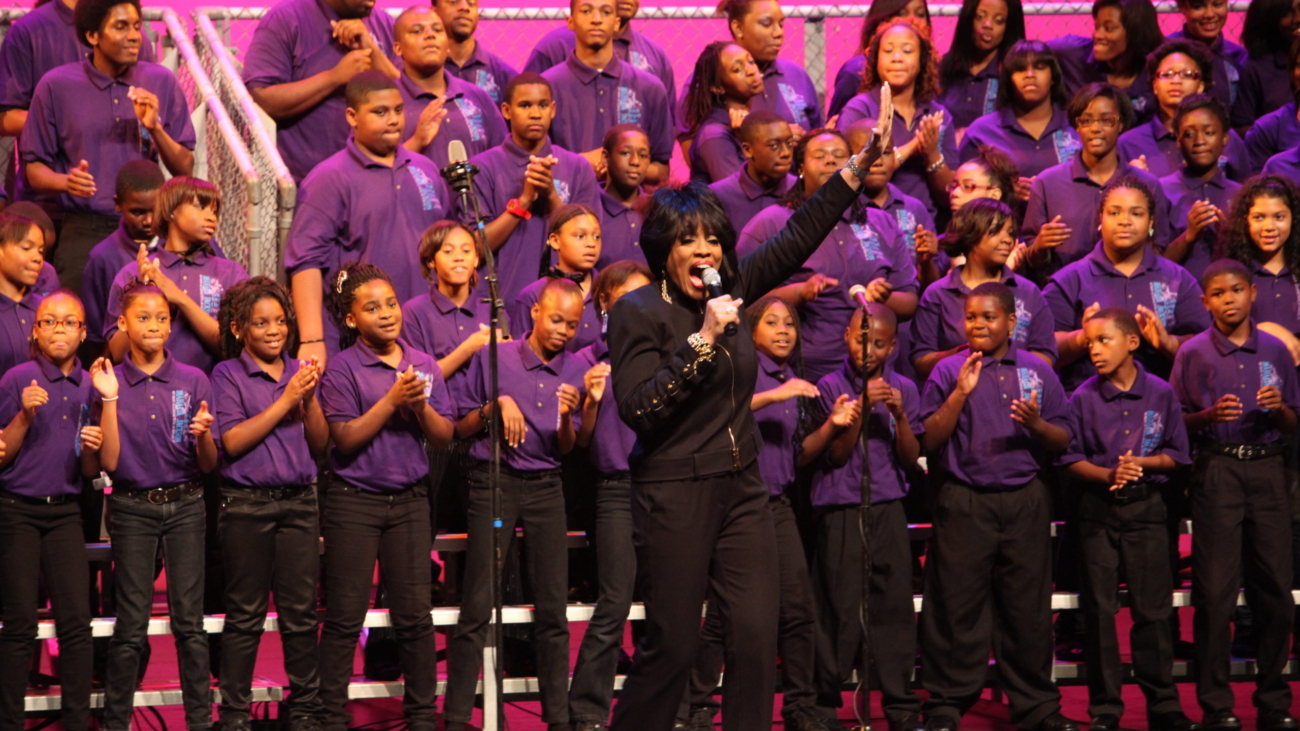
There are cities that produce music, and then there are cities where music functions as civic identity, spiritual expression, historical record, and daily survival all at once. New Orleans has always belonged to the second category. Its sound does not emerge from trend cycles or manufactured scenes. It rises from churches, sidewalks, neighborhood parades, funeral processions, corner stages, late-night jam sessions, and generations of musicians carrying traditions forward in real time. The city’s musical bloodstream has always been inseparable from gospel, and in 2026 that connection feels stronger, louder, and more visible than it has in years.
Across the final weekends of Jazz Fest season, through packed churches, crowded brass showcases, streaming spikes, community celebrations, and renewed national attention surrounding Southern gospel and soul music, one thing has become impossible to ignore: gospel music is not sitting quietly inside the walls of tradition anymore. It is actively shaping contemporary American music again, influencing everything from brass band culture and Southern soul to mainstream pop performance and independent artist development.
That living connection between gospel, New Orleans rhythm culture, and community celebration continues every Sunday afternoon on JamFest during the beloved “Gospel Lunch” radio show, broadcasting weekly from 12:30 PM until 2:00 PM. More than a radio program, Gospel Lunch has steadily evolved into one of the station’s defining cultural anchors, a weekly destination that captures the spirit of New Orleans music in a way that feels authentic, celebratory, and deeply rooted in the city’s traditions.
For listeners across the country, the program has become an immersive portal into the soundscape of New Orleans itself. Brass bands crash through the speakers with second-line energy. Gospel choirs rise with emotional force. Soul singers deliver performances that blur the lines between worship and storytelling. Funk grooves intersect with jazz improvisation. Blues traditions remain embedded underneath it all. The result is not genre programming in the conventional sense. It is a reflection of the way music actually lives inside New Orleans culture, where gospel, jazz, funk, soul, brass, blues, and street performance have never existed as isolated categories.
Hosted by DJs and curators deeply connected to the traditions of Louisiana music culture, Gospel Lunch does more than spin records. The show contextualizes the music historically and culturally, connecting contemporary releases to the generations of artists and church traditions that built the foundation for modern New Orleans music. Listeners hear the continuity between the city’s legendary gospel choirs and the modern brass revival movement. They hear how soul singers carry church cadences into contemporary R&B. They hear how rhythm structures born inside sanctuaries still drive the streets during second-line celebrations decades later.
That connection was impossible to miss during this year’s “Gospel Is Alive” showcase series, which recently concluded at Rock of Ages Baptist Church as part of the annual outreach initiatives connected to the New Orleans Jazz & Heritage Foundation. The ceremony represented more than another festival-adjacent event. It felt like a reaffirmation of gospel’s central role within the city’s cultural architecture.
This year’s honors carried enormous significance. National gospel icon Shirley Caesar was celebrated alongside New Orleans community leader Arthur Gremilion and the Nu Nation Choir, reinforcing the direct line between legendary national gospel institutions and the local musicians, choirs, educators, and organizers who continue sustaining the culture on the ground level throughout New Orleans neighborhoods every week of the year.
The event demonstrated something increasingly important in today’s music landscape: gospel remains one of the few musical traditions where intergenerational continuity still functions organically. Younger performers continue learning directly from church musicians, choir directors, brass leaders, and neighborhood ensembles. In New Orleans especially, that apprenticeship model remains alive. The result is a scene that feels historically grounded without becoming frozen in nostalgia.
That same energy spilled directly into the Morris Bart Gospel Tent during the closing stretch of Jazz Fest, where some of the festival’s most emotional and fully packed performances unfolded away from the mainstream headlines dominating national coverage. While many outside observers continue focusing primarily on headliners and crossover acts, longtime Jazz Fest attendees know the Gospel Tent has always housed some of the event’s most transcendent performances.
This year proved that again.
The Franklin Avenue Baptist Church Choir delivered one of the weekend’s defining moments, combining massive vocal arrangements with the kind of emotional intensity that can only emerge from ensembles that have spent years singing together inside actual congregational spaces rather than commercial rehearsal environments. Their performance carried the room with overwhelming force, turning the tent into something closer to a communal spiritual gathering than a conventional festival performance.
Meanwhile, the legendary Irma Thomas reminded audiences once again why her voice remains one of New Orleans’ greatest cultural treasures. “The Gospel Soul of Irma Thomas” showcased the direct relationship between gospel phrasing and Southern soul music in ways that no academic analysis could ever fully explain. Thomas does not simply sing songs. She channels decades of New Orleans musical memory through phrasing, timing, restraint, and emotional conviction that younger performers still study today.
For JamFest listeners tuning into Gospel Lunch, those performances represent exactly the kind of music culture the program continues highlighting every week. The show exists partly to bridge that gap between national visibility and local tradition, giving audiences access to the artists, choirs, ensembles, and recordings that often shape the city’s deepest musical experiences long before they become national talking points.
The post-festival momentum throughout New Orleans has only strengthened that atmosphere.
As Jazz Fest officially wrapped, legendary brass ensembles including the Dirty Dozen Brass Band, Treme Brass Band, and Da Truth Brass Band transitioned immediately back into neighborhood venues, clubs, second-line routes, and community gatherings throughout the city. In New Orleans, festival season never truly ends because the music never leaves the streets. The Fair Grounds may close for the year, but the cultural engine simply relocates back into the neighborhoods where it originated.
That continuation matters because second-line culture remains one of the purest examples of communal musical expression in America. These are not performances separated from daily life. They are living civic rituals where brass music, dance, movement, spirituality, mourning, celebration, and neighborhood identity intersect simultaneously.
Gospel Lunch has increasingly leaned into showcasing those connections by programming music that reflects the broader ecosystem surrounding New Orleans gospel traditions. A Sunday broadcast might move seamlessly from a traditional choir arrangement into brass-heavy funk, then transition into classic soul, street parade recordings, contemporary Southern gospel, and modern crossover artists whose music still carries unmistakable church influence underneath contemporary production.
That broader gospel resurgence is now becoming visible nationally as well.
One of the year’s most unexpectedly viral gospel moments emerged when pop artist Charlie Puth joined Jennifer Hudson for an impromptu rendition of Kirk Franklin’s “Silver and Gold” at the piano, generating massive engagement across streaming and social platforms. The moment resonated because it stripped away commercial production layers and returned focus to melody, lyricism, emotional delivery, and gospel composition itself.
Songs rooted in gospel tradition continue thriving because they are structurally designed around emotional truth rather than surface-level trend mechanics. Even contemporary pop artists repeatedly return to gospel frameworks when attempting to create moments that feel authentic and emotionally durable.
At the same time, Nashville’s Museum of Christian & Gospel Music launched a major pop-up exhibit centered around Amy Grant and her new album “The Me That Remains,” revisiting a career that helped redefine how gospel-adjacent artists could cross into mainstream visibility while maintaining spiritual and musical identity. The exhibit arrives at a moment when audiences appear increasingly interested in artists with genuine musical roots rather than purely algorithmic positioning.
Back in Louisiana, New Orleans native PJ Morton continues expanding his influence far beyond performance alone. Morton’s transition of Morton Records into a larger distribution partnership with SRG-ILS Group represents another major development for independent Southern artists seeking national reach without abandoning regional identity. Morton has consistently demonstrated that New Orleans musicians can build sustainable modern careers while remaining deeply connected to the traditions that shaped them.
New releases from artists like DOE and Tanya Nolan further demonstrate how gospel continues evolving stylistically while maintaining foundational themes of resilience, spiritual identity, celebration, and emotional honesty. DOE’s “Know Your Name” embraces crossover energy without losing its worship foundation, while Tanya Nolan’s move into traditional gospel territory reflects the continued gravitational pull gospel music exerts across broader R&B and soul communities.
All of those developments ultimately reinforce why programs like JamFest’s Gospel Lunch matter so deeply right now.
In an era dominated by fragmented playlists, disposable viral cycles, and shrinking attention spans, Gospel Lunch operates differently. It treats music as living culture rather than background content. It recognizes that gospel music is not merely a genre category but one of the foundational engines behind American musical history itself.
Every Sunday broadcast becomes both celebration and preservation. Listeners are not simply hearing songs. They are hearing the continuation of traditions that shaped jazz, soul, rhythm and blues, funk, brass band culture, Southern rock, and modern pop music alike.
The power of Gospel Lunch lies partly in its refusal to separate those traditions artificially. New Orleans never separated them in real life. Churches fed the brass bands. Brass bands influenced funk groups. Soul singers borrowed gospel structures. Jazz musicians learned inside sanctuaries. Street parades carried spiritual overtones. The city’s entire musical ecosystem evolved through constant cross-pollination.
JamFest’s Gospel Lunch understands that reality and programs accordingly.
For longtime followers of New Orleans music culture, the show delivers authenticity and historical continuity. For newer listeners, it offers an accessible entry point into one of America’s richest musical traditions without reducing the music into museum-piece nostalgia. The show feels alive because the culture itself remains alive.
That may ultimately be the defining story emerging from New Orleans in 2026.
Not merely that gospel survives, but that it continues expanding outward again. Into brass music. Into soul revival movements. Into contemporary independent labels. Into streaming culture. Into younger audiences rediscovering foundational American sounds. Into community festivals and neighborhood gatherings that still prioritize live musicianship, collective experience, and emotional connection.
And every Sunday afternoon, from 12:30 PM until 2:00 PM, JamFest’s Gospel Lunch continues bringing that spirit directly to listeners everywhere, carrying the sound of New Orleans far beyond Louisiana while remaining unmistakably rooted in the city that created it.