
There is a moment on a dance floor — you know the one — where the bass drops just right, the room collectively exhales, and for a few seconds, nothing else in the world exists. No rent hikes. No headlines. No calendar. Just the beat, the bodies, and the beautiful, unspoken agreement that everyone in that room chose to be exactly here, exactly now. That moment is what we have always been about at Club Night Radio Show, and it is what makes tonight — a night that carries both celebration and mourning, both energy and elegance — one of the most meaningful broadcasts we have ever aired.
Tonight is not just another Saturday. Tonight, we are dancing for the ones who paved the way. Tonight, we are spinning for a culture that refuses to die, even when the walls that once held it begin to close. And tonight, broadcasting live from the studio starting at 10:00 PM EST and running through 2:00 AM EST — with the party continuing all the way into Sunday morning around 9:00 AM EST on Sunday Spunday — we bring you four-plus hours of the most powerful electronic music on the planet, curated for a night that demands nothing less.
Welcome to Club Night Radio Show. Let’s talk about what is happening in the world of dance, why it matters, and why the floor never truly goes dark.
A 22-Year Legacy Closes Its Doors: The Last Dance at Club XYZ
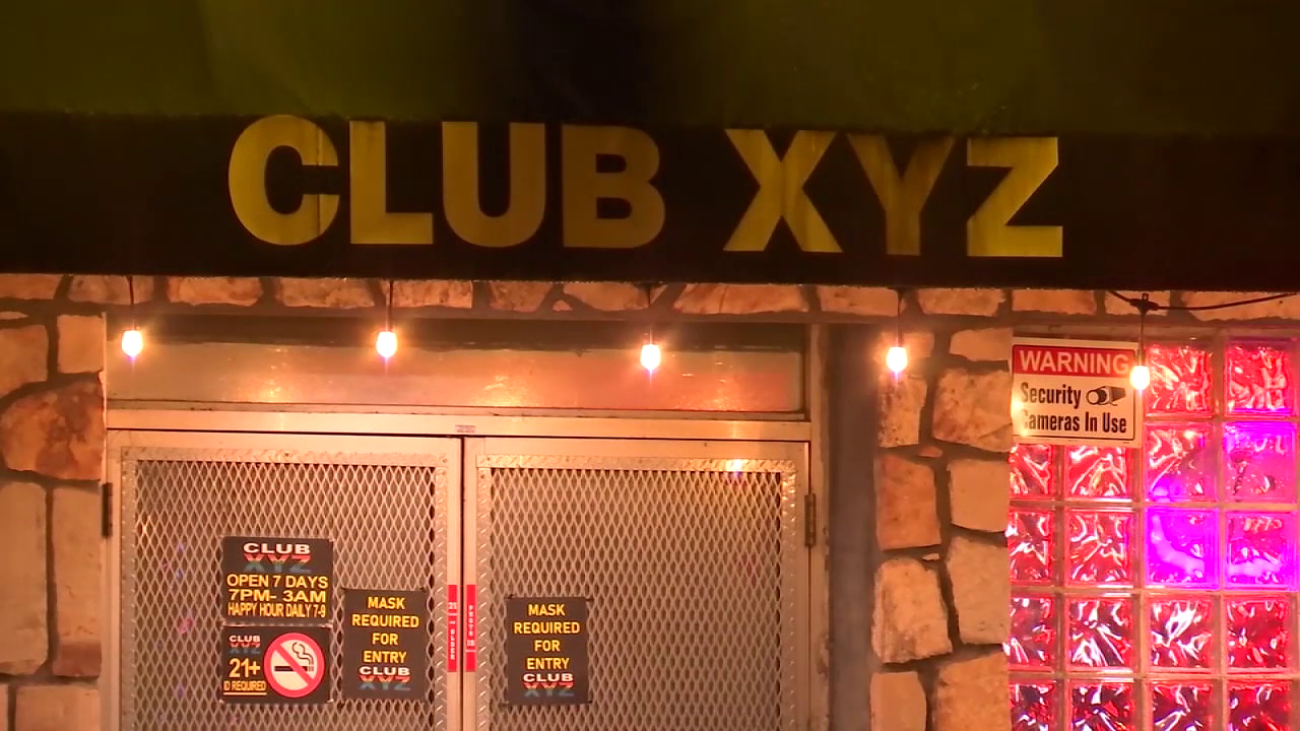
If there is one story that defines tonight more than any other, it is happening right now, in real time, on a street in Knoxville, Tennessee, where the lights are on one final time at a venue that shaped a community for over two decades.
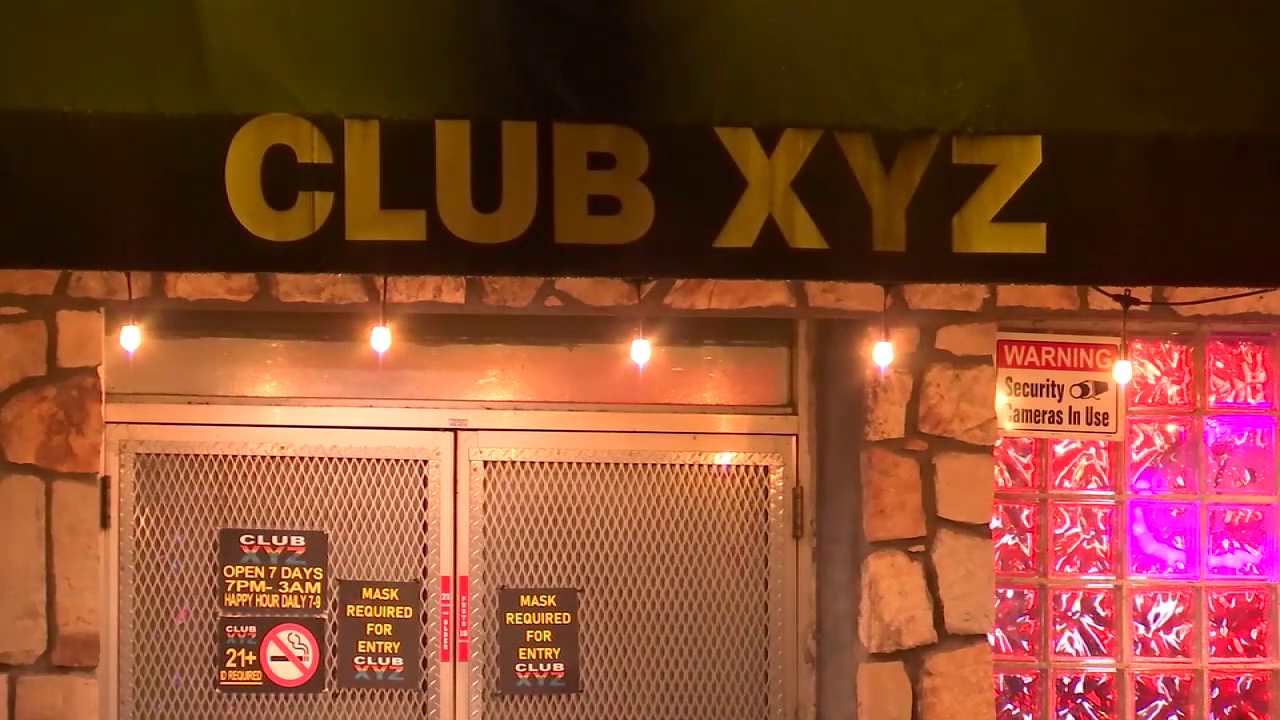
Club XYZ, the beloved LGBTQ+ dance club that opened its doors in October 2004 and became one of Happy Holler’s most iconic and culturally significant nightlife destinations, is hosting its absolute last night of operation tonight, June 27, 2026. After 22 years of drag performances, dance floors packed with joy, and a space that offered sanctuary, belonging, and pure liberation to thousands of people across its lifetime, Club XYZ is shutting down due to sudden and unsustainable rent increases that left ownership with no viable path forward.
Let that land for a moment. Twenty-two years. That is not a nightclub. That is a living institution. That is generations of people who found their tribe, discovered who they were, fell in love, celebrated milestones, grieved losses, and danced through all of it under one roof. Club XYZ was not just a place to go on a Saturday night. It was a place that told an entire community, in no uncertain terms: you belong here, you are safe here, you are celebrated here.
The closure is the result of rent hikes — a pattern that has become all too familiar for independent, community-rooted venues across the country. As property values in neighborhoods like Happy Holler have risen alongside the broader gentrification sweeping through secondary markets, the businesses that gave those neighborhoods their character in the first place are being pushed out by the very desirability they helped create. It is a cruel and familiar irony, and Club XYZ is now its most heartbreaking local casualty.
For those who have never walked through those doors, it can be difficult to communicate what exactly is lost when a place like this closes. LGBTQ+ nightlife venues have historically served purposes far beyond entertainment. They have functioned as community organizing hubs, mental health lifelines, cultural archives, and spaces where people who were marginalized or invisible in their daily lives could exist fully and freely. Drag performances at Club XYZ were not mere entertainment — they were art, advocacy, and affirmation happening simultaneously, every single weekend, for over twenty years.
Tonight, as the final songs play and the last set wraps, the people filling that dance floor are not just saying goodbye to a building. They are honoring a legacy that touched thousands of lives and gave Knoxville something genuinely irreplaceable.
On Club Night Radio Show tonight, we are spinning in their honor. Every track carries a little extra weight. Every beat lands with a little more intention. The dance floor at Club XYZ may go dark for the last time tonight, but the spirit that lived inside it — that electric, defiant, joyful spirit — is exactly what electronic music was built to carry forward.
The Macro Crisis Beneath the Headline: Why Nightclubs Are Disappearing
Club XYZ’s closure is heartbreaking on its own terms, but it also arrives as a symptom of something much larger — a structural crisis in nightlife culture that has been building for years and has now reached a genuinely alarming inflection point.
Post-pandemic data paints a stark picture. Active nightspots across the United States and much of the Western world have declined by roughly 20 percent compared to pre-pandemic numbers from 2020. That is not a blip or a temporary adjustment period. That is a fundamental restructuring of how, where, and whether people gather to dance. The causes are multiple and interlocking: commercial real estate costs that have made ground-floor entertainment spaces financially unviable in most urban markets, the lingering behavioral shifts that followed years of lockdowns and social disruption, inflation squeezing both operators and patrons simultaneously, and a broader generational renegotiation of how nightlife fits — or no longer fits — into daily life.
For small, independent venues — the kind that have always been the backbone of dance culture, the incubators of new sounds, the safe havens for subcultures that never got programmed at the festival mainstage — the economics have become brutal. The cost of doing business has risen faster than ticket prices can absorb. Licensing, insurance, staffing, and rent have all moved in one direction while foot traffic has proven unpredictable and audience loyalty increasingly fragmented across dozens of competing entertainment options.
It would be easy to frame this purely as an economic story, and the economics are certainly dire. But the deeper loss is cultural. The traditional nightclub — loud, late, slightly chaotic, vibrating with collective energy and anonymous connection — served a social function that is genuinely difficult to replicate. It was one of the few spaces in public life where class markers blurred, where people from different backgrounds occupied the same floor and moved to the same rhythm, where the DJ functioned as a kind of secular conductor orchestrating a shared emotional experience. As those spaces disappear, what replaces them matters enormously.
What is emerging in their place is a different, more fragmented landscape — and it tells us a great deal about how culture shifts under pressure.
The Rise of Soft Clubbing and Day Rave Culture
Walk into certain corners of the internet today, and you will encounter a concept that would have seemed like a contradiction just a decade ago: the sober dance party. No alcohol. No 3:00 AM last call. No stumbling home in the morning light. Instead, daytime events, wellness-conscious atmospheres, and a strict last call at 10:00 PM — because the whole thing starts at noon.
This is what has come to be called “soft clubbing,” and it is not a niche phenomenon anymore. Driven largely by Millennial and Gen Z attendees who are drinking less, prioritizing mental health, and reconsidering the relationship between nightlife and excess, the soft clubbing movement has produced events like the Earlybirds Club — which, in a striking piece of timing, held a massive throwback dance party in Salt Lake City today, June 27. The Earlybirds model is built around daytime dancing, clean energy, and the radical idea that you do not need to alter your consciousness to have a transcendent experience on a dance floor. You just need the right music.
The instinct behind it is not entirely new — the early house and techno scenes had deep roots in sobriety-adjacent culture, and the spiritual dimension of collective dance long predates alcohol as a social lubricant. What is new is the mainstream visibility of an explicit, branded alternative to the traditional model. Soft clubbing events are selling out. Day raves are becoming a genre unto themselves, complete with curated playlists, festival aesthetics, and social media ecosystems that rival anything happening after midnight.
This shift is worth taking seriously not as a replacement for late-night culture but as a signal about what people actually want from communal dance experiences. They want the transcendence. They want the connection. They want the music to take them somewhere. What they are increasingly willing to negotiate on is the specific conditions under which that happens.
For those of us who live and breathe the late-night hours — who know that there is something absolutely unreplicable about a room at 1:00 AM when everyone has surrendered to the same groove — this is a complicated moment. We honor what is emerging because it reflects a genuine desire for community and collective experience. And we also hold the line for the specific magic that happens when the clock ticks past midnight and the music gets deeper and the floor gets more honest.
Club Night Radio Show exists in that late-night space. We always will. From 10:00 PM to 2:00 AM EST and beyond into Sunday Spunday, we are the radio home for everyone who believes the best sets start when the rest of the world goes to sleep.
Global Pulse: What the International Electronic Music Scene Is Doing Right Now
Even as domestic venues struggle and culture wars over nightlife economics continue, the global electronic music scene is producing moments of genuine beauty and historical significance that remind us why this music matters and why it endures.
Tonight, we raise the broadcast in honor of one of the most visually and musically spectacular events in recent European club culture: a sold-out back-to-back performance at France’s breathtaking Château de Chantilly, where house music legend Carl Cox linked up with rising powerhouse Mau P for an open-air set that merged thirty years of headlining energy with the architectural grandeur of a centuries-old estate. The images alone are extraordinary — laser lights cutting through the French night sky, a crowd moving beneath stone towers and sculpted gardens, the universal language of electronic music being spoken in one of the most historically resonant settings imaginable. Events like this are what happens when dance culture grows fully into its own confidence, when DJs who once played underground warehouses command settings that rival any classical concert hall for sheer magnificence. Carl Cox has been one of the most important figures in global electronic music for three decades, and watching him command a stage like Château de Chantilly alongside next-generation talent like Mau P is a masterclass in how this culture evolves while never losing its core identity.
Across the continent in Berlin — still the global capital of techno in ways that no other city has seriously challenged — RSO has launched its official fifth-anniversary tour with a move that carries significant institutional weight. For the first time in its history, RSO is exporting its resident community outside the Berlin city limits, collaborating with partner clubs in Paris, Brussels, and Madrid throughout the summer months. This is not simply a touring circuit — it is a statement about the portability and universality of the culture that venues like RSO have nurtured within their walls. The fact that Berlin’s techno institutions are beginning to project outward speaks to the maturation of a scene that spent years being protective of its specificity. Something is shifting. The underground is no longer just underground.
Not all of tonight’s European news is celebratory. Several high-profile outdoor events on the continent, including Rotterdam’s Nous’klaer Festival, were abruptly canceled today in response to extreme heat warnings that health authorities deemed medically dangerous. This is becoming an increasingly common story across summer festival culture — climate conditions that simply were not part of the planning calculus a decade ago are now forcing cancellations, time changes, and venue redesigns in ways that will fundamentally reshape outdoor electronic music events in the years ahead. The conversation about climate and festival culture is no longer optional, and the industry’s response to events like today’s Rotterdam cancellation will be instructive.
Ten Years Since Pulse: Holding the Legacy of Queer Dance Culture
This month marks the ten-year anniversary of the Pulse nightclub shooting in Orlando, Florida — one of the deadliest mass shootings in American history and a targeted attack on a space that was, by every definition that matters, a queer dance sanctuary. Communities across San Francisco and throughout the country have held vigils, commemorative marches, and remembrance events to honor the 49 people who were killed that night simply for being who they were in a place that was supposed to be safe.
We hold that anniversary in our hearts on Club Night Radio Show. We hold it especially tonight, as we also witness the final hours of Club XYZ — because both events, separated by a decade and vastly different in nature, point to the same truth: the spaces where queer people have gathered to dance and be fully themselves have never been guaranteed. They have been built by community, defended by community, mourned by community, and rebuilt by community, over and over again.
The Pulse anniversary is not just a moment for grief, though grief is entirely appropriate. It is also a moment to name what those 49 people were doing when they were killed: they were dancing. They were in a nightclub on a Saturday night, doing exactly what humans have done in exactly those kinds of spaces for decades — finding joy, finding each other, moving together to music that made them feel alive. And the communities that continue to gather in spaces like that, week after week, are doing something quietly but profoundly resistant. They are insisting that joy is not optional. They are insisting that the dance floor is not a luxury. They are insisting that spaces of belonging and celebration matter, and that they will keep showing up.
Club Night Radio Show stands in that tradition. Not just as entertainment, but as an act of community. Every Saturday night, we build a space — over airwaves, through speakers, in earbuds and car stereos and living rooms and late-night apartments — where people who love this music can belong together, even if they are miles apart.
What Club Night Radio Show Is and Why Tonight Matters
For those joining us for the first time tonight — and if you are reading this, we are so glad you found your way here — Club Night Radio Show is exactly what it sounds like and so much more than the name implies.
Every Saturday night, beginning at 10:00 PM Eastern Standard Time, we go live from the studio with four hours of the most electrifying electronic music being made on the planet right now. House. Techno. EDM. Remixes from the best music festivals in the world. DJ sets that take you from deep and hypnotic to hands-in-the-air euphoric and everywhere in between. We close at 2:00 AM with the energy still peaking — because that is the only way to close — and then Sunday Spunday takes the baton and carries the party all the way through Sunday morning until around 9:00 AM EST.
This is not background music. This is a broadcast built for people who take electronic music seriously, who understand that the DJ is a storyteller, that a great set has architecture and intention and emotional movement, that the right track at the right moment can feel like revelation. We bring you that experience every single week, week after week, from our studio to wherever you are in the world.
Tonight’s broadcast carries all of the weight and meaning of everything described in these pages. We are celebrating a global scene that continues to produce extraordinary art at Château de Chantilly, expanding cultural reach in Berlin, weathering cancellations with grace, and building new models for communal experience in Salt Lake City. We are honoring ten years of Pulse’s legacy and the ongoing, irreplaceable importance of queer dance spaces. And we are dancing — genuinely, deliberately, with full hearts — in honor of Club XYZ’s final night, twenty-two years of joy signing off in Knoxville while we keep the signal going from our studio.
The floor never truly goes dark. The music keeps moving. And as long as Club Night Radio Show is broadcasting, the party is very much alive.
Why Electronic Music Endures: The Case for the Dance Floor
In moments like these, when venues close and scenes shift and culture feels like it is reorganizing itself in ways that are not entirely clear, it is worth stepping back and saying plainly what this music does and why it matters.
Electronic music — house music, techno, trance, drum and bass, EDM in all its countless forms — is one of the most democratic and emotionally direct art forms humans have produced. It does not require literacy to access. It does not require cultural context to feel. It bypasses the intellect and speaks directly to the body, to the nervous system, to the ancient, preverbal part of the brain that has always responded to rhythm and repetition and collective sound. When a DJ reads a room correctly and plays the right record at the right moment, what happens is not merely entertainment. It is a kind of communion.
This is why the dance floor has always been a site of resistance as well as release. It is why LGBTQ+ communities built underground scenes in the face of discrimination — because the dance floor offered a freedom and an equality that the rest of society denied them. It is why electronic music emerged from Black and queer communities in Chicago and Detroit and New York in the 1970s and 1980s and then spread across the world: because it carried a spirit of liberation in its DNA. Every house track and every techno record that came after contains an echo of that original impulse, whether the listener consciously knows it or not.
When Club XYZ closes tonight, it is not the end of that spirit. When outdoor festivals get canceled due to heat and venues struggle under rent pressure and the landscape of nightlife shifts in ways none of us can fully predict, the spirit does not die. It migrates. It finds new forms. It shows up in day raves in Salt Lake City and open-air sets at French châteaux and anniversary tours in European techno capitals and, yes, in Saturday night radio broadcasts that run from 10:00 PM to well past dawn.
The dance floor is not a building. The dance floor is wherever people choose to show up for this music together. That has always been the truth. Tonight, we are reminded of it more clearly than ever.
Tune In Tonight: Club Night Radio Show, 10 PM EST
Tonight, we dedicate the entire broadcast to everyone dancing, everywhere. To the final floor at Club XYZ in Knoxville. To the Pulse community, ten years on. To the outdoor dancers in Rotterdam who did not get their night. To everyone showing up for soft clubbing and day raves and the evolving, irreducible desire to move together. And to every DJ, producer, promoter, and venue owner who has ever turned a room into something sacred.
Club Night Radio Show goes live at 10:00 PM Eastern Standard Time. We run through 2:00 AM EST. Sunday Spunday picks it up from there and carries the music all the way through Sunday morning until around 9:00 AM EST.
Come as you are. Stay as long as you can. The music is waiting.
Every Saturday night, we build the floor together — one track, one beat, one electric moment at a time.
Club Night Radio Show — Broadcasting live every Saturday night, 10 PM to 2 AM EST, continuing into Sunday Spunday through 9 AM EST. DJ sets, studio remixes, and the best electronic music from festivals around the world. The party never stops.