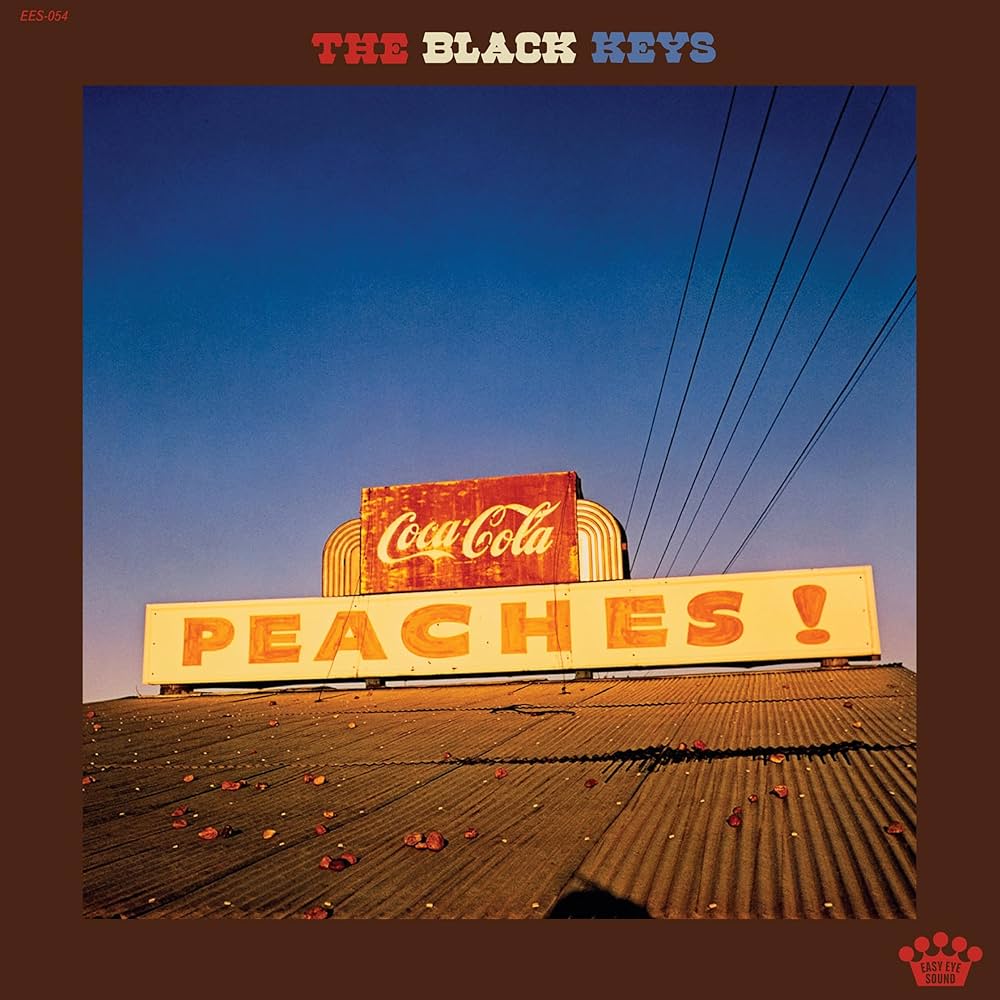
The Black Keys Strip It Back on Peaches on The NRN Radio Show

 DJ Don Edwards
The Black Keys Strip It Back on Peaches! and Rediscover the Pulse That Made Them Essential. For a band that has spent more than two decades moving from basement recording sessions to sold-out arenas around the world, the most surprising thing about Peaches! is not its scale. It is its restraint. The Black Keys are not chasing bigger hooks, louder production, or some oversized reinvention designed to remind people they still matter. Instead, Dan Auerbach and Patrick Carney have done something far more difficult. They have gone back to instinct.
That decision runs through every second of Peaches!, a record that feels alive in a way modern rock albums often struggle to achieve. The songs move with looseness and friction. The grooves drag just enough to feel human. The guitars are dirty without sounding forced. The drums breathe. Nothing feels trapped inside a grid. You can hear players reacting to each other in real time, which is increasingly rare in an era where albums are assembled more than performed.
For longtime Black Keys listeners, Peaches! immediately recalls the spirit that first made the Akron duo impossible to ignore. Before the Grammy wins, before the festival headlines, before the mainstream crossover records and massive touring cycles, there were two musicians making raw, stripped-down blues rock with a tape machine and an almost stubborn commitment to feel over perfection. That DNA never disappeared entirely, but Peaches! puts it back at the center of the conversation.
Auerbach has described the album as the group’s most natural work since The Big Come Up, and the comparison makes sense the deeper you get into the record. Rather than constructing tracks layer by layer, the band committed to recording together in the room, allowing momentum and chemistry to dictate the shape of the performances. Overdubs were minimized. Edges were left rough. Instead of sanding down imperfections, the Black Keys leaned into them. The result is an album that sounds immediate and physical, like it is happening directly in front of the listener rather than being processed through endless revisions.
That approach also extends to the technical side of the production. Peaches! marks the first time since 2006’s Magic Potion that the Black Keys mixed an album entirely themselves. That detail matters because it reflects more than nostalgia. It reflects control. Auerbach and Carney are not revisiting the past because they are trapped there. They are revisiting the core mechanics of how they work best together.
There is a confidence throughout the record that only comes from longevity. The Black Keys are no longer trying to prove they belong. They survived the garage-rock revival that helped launch them. They survived the industry’s streaming transformation. They survived the inevitable cycles of backlash that hit almost every major rock act that breaks into the mainstream. Through all of it, they kept returning to the same essential strengths: rhythm, groove, tension, and the understanding that a great rock song does not need excess to leave a mark.
What makes Peaches! especially compelling is how clearly it reflects the duo’s ongoing obsession with music discovery itself. Auerbach and Carney have become increasingly immersed in crate-digging culture in recent years, channeling that passion into their increasingly popular Record Hang DJ events, where they spin vintage 45s and deep-cut soul, garage, funk, and blues records for packed crowds around the world. That influence bleeds directly into this album. The rhythms swing harder. The riffs feel greasy and immediate. The songs carry the kind of dance-floor propulsion that comes from musicians studying records built for movement rather than algorithms.
There is also something refreshing about hearing a veteran band resist overcomplication. So much modern rock music feels burdened by the pressure to announce its importance. Albums arrive wrapped in mythology, conceptual frameworks, and carefully managed narratives about artistic evolution. Peaches! does not carry that weight. It is not trying to position itself as a “statement” album. It is simply two musicians reconnecting with the mechanics that made them dangerous in the first place.
That honesty gives the record its energy. The Black Keys understand that swagger works best when it is earned rather than performed. Across Peaches!, the duo sounds relaxed enough to let grooves unfold naturally instead of forcing every moment toward some oversized climax. The songs simmer. They strut. They lock into rhythm and trust listeners to stay there with them. That restraint becomes its own form of confidence.
The timing of the release also says something important about where rock music currently stands. While much of the industry chases genre hybrids and digital trends, there remains a massive audience hungry for records that feel tactile and rooted in musicianship. The Black Keys have always understood that connection between classic groove-oriented music and modern audiences. Their best work never sounded retro for the sake of retro. It sounded timeless because it understood the emotional mechanics of blues, soul, garage rock, and rhythm-and-blues traditions without turning them into museum pieces.
That balance continues throughout Peaches!. The album carries echoes of vintage influences, but it never feels trapped by reverence. Instead, it sounds like a band actively using those influences as fuel. The grooves remain contemporary because the performances are alive. There is sweat in these recordings. There is motion. There is personality.
For JamFest listeners and live-music obsessives, that distinction matters. This is a record built around the same qualities that make great live performances unforgettable: chemistry, risk, spontaneity, and trust between players. You can practically hear eye contact happening between Auerbach and Carney as songs lock into place. The album rewards volume because it was clearly designed to move air rather than simply occupy digital space.
That live-in-the-room energy also makes Peaches! one of the more compelling rock releases for listeners who care about musicianship over spectacle. The Black Keys are not trying to manufacture authenticity. They are relying on decades of chemistry and shared musical language. That is much harder to fake than production trends or aesthetic branding.
It is also why the album feels so connected to the broader culture surrounding vinyl collecting, DJ culture, late-night dance parties, and deep musical excavation. The Black Keys continue to operate less like detached rock stars and more like lifelong music fans who still get excited about finding some forgotten 45 hidden in a crate. That curiosity keeps the music from becoming stagnant. Even when the duo returns to familiar territory, they approach it with the enthusiasm of people still chasing discovery.
That spirit makes Peaches! feel especially significant within the current rock landscape. Too many legacy acts approach new releases like obligations. The Black Keys approach this one like an opportunity to reconnect with the reasons they started making music together in the first place.
The album’s release also arrives at a moment when listeners increasingly crave records with personality and texture. Hyper-polished production has dominated popular music for years, but audiences continue gravitating toward artists capable of sounding human. Peaches! embraces imperfections because imperfections are often where emotional connection lives. The grooves bend slightly. The tempos breathe. The recordings feel inhabited rather than assembled.
For fans following the JamFest universe and the broader culture of live-driven music, Peaches! fits naturally into the ongoing conversation about what makes records endure. The answer is rarely technology or scale. It is feel. The Black Keys understand that better than most bands of their generation.
That same spirit is also front and center during the latest edition of the NRN Radio Show – Unveiling the Enchantment: A Very Special Handpicked New Release by Your Favorite Music Artist, where Peaches! takes center stage as one of the most compelling rock releases currently reshaping the conversation around modern blues-rock and groove-driven songwriting. The show dives into the album’s stripped-back production philosophy, the duo’s renewed emphasis on live tracking, and the deeper musical influences fueling the record’s rhythmic backbone. For listeners who still value albums built around musicians actually playing together in real time, the NRN Radio Show captures exactly why this release matters beyond the headlines and streaming numbers.
What ultimately makes Peaches! resonate is that it never feels desperate to reclaim anything. The Black Keys are not attempting to recreate youth or relive a moment. They are simply leaning back into the chemistry and musical instincts that have always worked best for them. There is maturity in that decision. There is discipline in understanding what not to overthink.
After fourteen studio albums, countless tours, and decades inside an industry that constantly reinvents itself, Dan Auerbach and Patrick Carney still sound most convincing when they trust the groove and let the songs breathe. Peaches! succeeds because it understands a truth too many modern records forget: sometimes the strongest move a band can make is stripping away everything unnecessary and letting the music speak with its own pulse again.