Gorillaz Ascend Into Grief, Memory, and Reinvention on The Mountain on the NRN Radio Show

 DJ Don Edwards
For more than two decades, Gorillaz have existed in a category almost entirely their own. Part virtual band, part multimedia experiment, part global music collective, Damon Albarn and Jamie Hewlett’s long-running creation has continually reshaped what a modern music project can become. Every Gorillaz release arrives carrying its own visual language, emotional framework, and sonic architecture. Yet even within a catalog built on constant transformation, The Mountain stands apart.
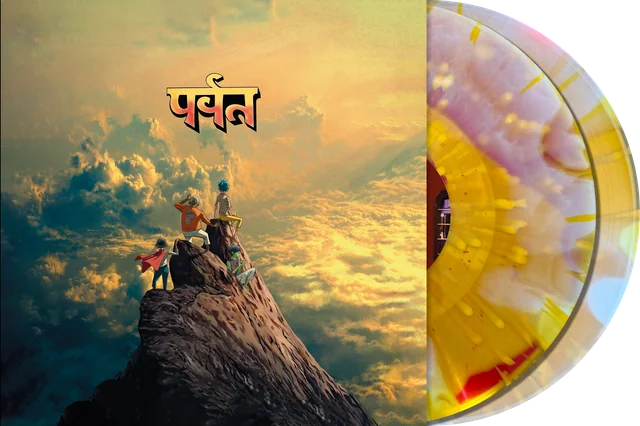
Released on February 27, 2026, The Mountain — stylized in Devanagari as पर्वत — is not simply another Gorillaz album. It is one of the most personal and emotionally exposed projects Albarn and Hewlett have ever created together. The record arrives carrying the weight of grief, memory, mortality, and spiritual reckoning, all filtered through one of the most musically adventurous records the band has produced in years.
At the center of the album is loss. During the making of The Mountain, both Albarn and Hewlett experienced the deaths of their fathers within ten days of each other. That shared experience fundamentally shaped the emotional direction of the project. Rather than avoid grief or disguise it behind abstraction, the album moves directly into it, using the metaphor of a mountain as a symbolic journey through mourning, reflection, acceptance, and transcendence.
The result is a record that feels remarkably human beneath its surrealist exterior. Gorillaz have always excelled at building worlds, but The Mountain may be the first time the emotional stakes inside that world feel this raw and immediate. Beneath the electronic textures, animated mythology, and globe-spanning collaborations lies an album wrestling with mortality in real time.
What makes the project especially compelling is how naturally Gorillaz weave those themes into an expansive sonic landscape that never becomes emotionally heavy-handed. Instead of turning inward completely, Albarn and Hewlett widened the record’s perspective geographically and musically, much of it written and recorded throughout India, particularly in Jaipur and Varanasi. That environment transformed the album’s sonic identity.
The influence of Hindustani classical music runs deeply through The Mountain. Traditional instrumentation, rhythmic structures, spiritual atmospheres, and melodic phrasing become integral to the album rather than decorative additions. Yet the record never sounds like cultural tourism or surface-level fusion. Gorillaz absorb those influences into their own musical language, allowing them to coexist naturally alongside electronic production, alternative pop, dub textures, hip-hop rhythms, and cinematic orchestration.
That balancing act has always been central to Gorillaz at their best. Albarn’s genius as a collaborator lies in his ability to create space where radically different sounds and perspectives can coexist without collapsing into chaos. On The Mountain, that instinct reaches another level. The album feels massive in scope while remaining emotionally coherent.
Its fifteen-track sequence unfolds almost like a spiritual travelogue through memory and transition. Songs drift between dream states, political unease, emotional reflection, and moments of startling intimacy. Even at its most experimental, the record maintains a sense of movement, as though the listener is actively climbing through emotional terrain rather than passively hearing songs.
The opening title track, “The Mountain,” immediately establishes the album’s scale and emotional ambition. Featuring Dennis Hopper and Anoushka Shankar, the song introduces the album’s themes of transcendence and impermanence through swirling instrumentation and hypnotic atmosphere. The combination of spoken-word gravity, Indian classical influence, and cinematic electronic production creates an opening that feels less like the beginning of an album and more like stepping into an alternate dimension.
From there, The Mountain continuously expands outward through an extraordinary collection of collaborators. Gorillaz records have always thrived on unexpected pairings, but this album’s guest list carries unusual emotional resonance. The inclusion of posthumous appearances from Bobby Womack, Tony Allen, and De La Soul’s David Jolicoeur gives the project an added sense of reflection and continuity. These are not cameo appearances inserted for nostalgia. They feel like conversations across time.
“The Moon Cave,” featuring Asha Puthli, Black Thought, and Bobby Womack, becomes one of the emotional centers of the record, balancing groove and melancholy with remarkable precision. Womack’s presence feels especially profound, adding another layer of spiritual continuity to an album already preoccupied with mortality and legacy.
Elsewhere, Sparks inject surrealist tension into “The Happy Dictator,” while IDLES bring abrasive urgency to “The God of Lying.” “Delirium” incorporates the unmistakable voice of Mark E. Smith in ways that feel appropriately chaotic and disorienting, while “Damascus,” featuring Omar Souleyman and Yasiin Bey, becomes one of the album’s most rhythmically hypnotic moments.
By the time listeners arrive at “Casablanca,” featuring Paul Simonon and Johnny Marr, The Mountain feels less like a collection of tracks and more like an interconnected emotional landscape populated by ghosts, collaborators, memories, and living voices all occupying the same artistic space.
The album closes with “The Sad God,” featuring Black Thought and Anoushka Shankar, a finale that captures the emotional architecture of the entire project. The track does not resolve grief neatly because grief itself rarely resolves cleanly. Instead, it reaches something closer to acceptance. The mountain remains, but the climb changes the traveler.
What elevates The Mountain beyond even Gorillaz’ already ambitious catalog is how fully realized the project becomes visually as well. Jamie Hewlett’s accompanying eight-minute animated short film built around “The Mountain,” “The Moon Cave,” and “The Sad God” reinforces the album’s emotional and aesthetic identity through hand-drawn animation inspired by classic 1960s Disney works like The Jungle Book. The choice to lean into traditional animation techniques instead of hyper-digital aesthetics gives the visuals warmth, texture, and emotional intimacy that mirror the album itself.
That artistic decision says something important about the larger philosophy behind The Mountain. In an era increasingly driven by synthetic perfection and algorithmic design, Gorillaz intentionally embraced handmade imperfection and tactile artistry. The album feels crafted rather than generated. Every layer carries personality and intention.
For JamFest listeners, The Mountain represents the kind of ambitious, genre-defying musical statement that still reminds audiences what albums can achieve when artists fully commit to world-building and emotional honesty. This is not background music. It demands immersion. It rewards patience. It invites repeated listens because every return reveals new emotional and sonic details hiding inside its layers.
That immersive quality also makes The Mountain a natural centerpiece for the NRN Radio Show – Unveiling the Enchantment: A Very Special Handpicked New Release by Your Favorite Music Artist. Few albums released this year better embody the idea of a fully realized artistic experience crossing music, storytelling, visual art, grief, memory, and cultural influence into one unified statement. The show’s spotlight on Gorillaz captures exactly why this release feels so significant not just for longtime fans, but for the broader evolution of alternative and experimental music itself.
There is also something particularly meaningful about Gorillaz making this record independently under their own KONG label. After decades operating within the machinery of the music industry while simultaneously critiquing it, The Mountain becomes the group’s first entirely independent studio album release. That freedom can be heard throughout the project. The album moves according to emotional logic rather than commercial expectation. Songs unfold patiently. Ideas expand without compromise. The record trusts listeners enough not to simplify itself.
That confidence matters because it reflects where Gorillaz now stand culturally. Few projects from the early 2000s remain this creatively restless after so many years. Even fewer continue finding new emotional territory to explore. Albarn and Hewlett could easily lean on nostalgia, recycling the aesthetics and sounds that originally made Gorillaz famous. Instead, they continue pushing toward uncertainty and experimentation.
Yet for all its ambition, The Mountain never loses emotional focus. The record works because beneath its massive conceptual framework lies something universally recognizable: the experience of trying to navigate loss while still moving forward through life. The mountain is grief. The mountain is memory. The mountain is survival itself.
What Gorillaz accomplish on this album is not simply stylistic fusion or conceptual innovation. They create a work that feels emotionally lived-in, spiritually curious, and artistically fearless without becoming self-important. That balance is extraordinarily difficult to achieve, especially for artists operating at this scale.
In many ways, The Mountain feels like Gorillaz rediscovering the core reason the project mattered in the first place. Beyond the animation, beyond the collaborators, beyond the mythology, Gorillaz has always been about creating spaces where emotion, experimentation, and cultural collision can coexist freely. This album pushes that mission deeper than ever before.
After all these years, Damon Albarn and Jamie Hewlett still understand something many artists lose over time: evolution only matters when it remains emotionally honest. The Mountain may be filled with ghosts, spiritual metaphors, and global sonic textures, but at its core, it is about human beings trying to make sense of absence, memory, and connection.
That honesty is what gives the album its weight. That honesty is what makes the climb worth taking.