
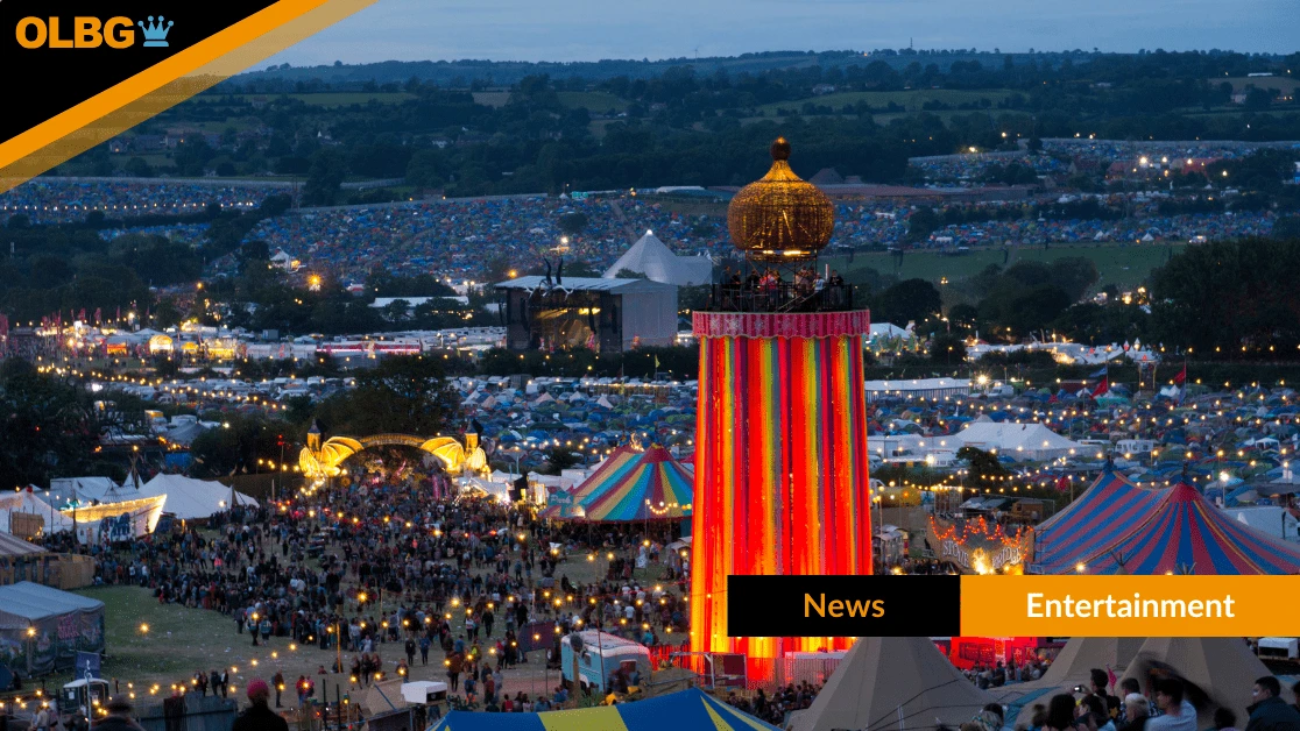
Every Thursday night, JamFest transforms into the ultimate destination for live festival recordings with Festival Night, an eight-hour nonstop journey through the greatest performances ever captured at the world’s most iconic music festivals. From sunrise sets and late-night jams to unforgettable headline moments that defined generations of music fans, Festival Night is built for listeners who have stood in muddy fields, danced under open skies, and experienced the communal electricity that only live festival culture can create.
This week’s spotlight turns toward one of the most important and culturally significant festivals on Earth: Glastonbury Festival and the festival’s officially announced return dates for June 23 through June 27, 2027.
While many fans initially reacted with disappointment to the absence of a 2026 edition, the reality behind the decision reflects exactly why Glastonbury continues to hold such a respected place within global music culture. The 2026 pause is not a cancellation. It is a carefully planned “fallow year,” a long-standing tradition that reinforces the festival’s commitment to sustainability, community, and environmental stewardship.
For decades, Glastonbury has represented far more than a concert event. It has become a living ecosystem, a temporary city built around music, creativity, activism, and collective experience. But for one week each summer, more than 200,000 people descend upon Worthy Farm, fundamentally transforming a working dairy farm into one of the largest cultural gatherings in the world. The impact of that scale is enormous, and the organizers understand that preserving the land is inseparable from preserving the festival itself.
The decision to take a break in 2026 serves several essential purposes. First and foremost is land recovery. Worthy Farm operates as an active agricultural property for the overwhelming majority of the year, and the soil, grasslands, and infrastructure require time to recover from the immense physical impact caused by hundreds of thousands of attendees, stages, vehicles, campsites, and temporary facilities. Soil compaction and pasture degradation are unavoidable realities for any event of this magnitude. A fallow year allows the land to regenerate naturally while giving the farm’s cattle extended access to grazing areas that are otherwise occupied during festival preparation and operation.
Equally important is the respite provided to the surrounding Somerset community. Glastonbury creates a temporary population center larger than many cities, bringing with it traffic, noise, congestion, and logistical pressure on local infrastructure. The break year offers residents of Pilton and the surrounding region an opportunity to recharge after years of accommodating one of the world’s largest music gatherings.
For organizers and volunteers, the pause also serves as a critical operational reset. Festival co-organizer Emily Eavis has frequently emphasized the importance of stepping back periodically to maintain the festival’s original ethos and avoid allowing the event to become disconnected from its roots. The fallow year enables infrastructure repairs, contract restructuring, planning updates, and creative redevelopment that would be nearly impossible during an active annual production cycle.
Historically, these breaks are part of Glastonbury’s DNA. Although the pandemic forced the festival off the calendar in 2020 and 2021, those were extraordinary circumstances rather than intentional pauses. The last official planned fallow year occurred in 2018, continuing a tradition that reflects the festival’s enduring commitment to sustainability and long-term preservation.
What makes the 2026 pause particularly fascinating is that the silence itself is being transformed into a major environmental initiative. During the off year, the Eavis family is launching an ambitious rewilding campaign that will dramatically reshape portions of Worthy Farm and the surrounding Mendip countryside. More than 30,000 native trees are scheduled to be planted as part of what is being called the “Legacy Forest” initiative.
The project extends the festival’s environmental philosophy into something permanent and generational. Native species including oak, birch, and hazel will help create long-term habitats for local wildlife while strengthening biodiversity across the region. The tree systems are also expected to improve natural drainage across the property, helping the land better absorb Somerset’s notoriously heavy rainfall while reducing flooding and erosion issues that have historically impacted the festival during wet years.
The environmental benefits extend even further. The expanded forestation effort represents a meaningful contribution toward Glastonbury’s broader carbon reduction strategy, helping offset emissions associated with transportation, power consumption, staging, and festival logistics. Rather than simply pausing operations during the off year, organizers are using the time to physically improve the land and create environmental assets that will continue evolving for decades.
Fans across the world are also being invited to participate directly in the project. Through “Plant a Tree” sponsorship opportunities, supporters can contribute financially toward new tree planting efforts and receive digital certificates connected to the groves being developed across the property. Community planting weekends are also expected to take place during late 2026 and early 2027, bringing volunteers together to help build the next phase of Worthy Farm’s environmental future.
When Glastonbury finally reopens in 2027, many of these newly planted wooded areas are expected to become integrated into the festival grounds themselves, particularly within the beloved Green Fields district, where shaded relaxation areas and expanded ecological zones will offer festival-goers a visible reminder of the event’s deeper commitment to coexistence with the natural environment.
That philosophy is exactly why Glastonbury remains such a powerful force within live music culture. In an era where many festivals have become increasingly corporate and commercially standardized, Glastonbury continues to preserve a sense of identity rooted in artistic freedom, environmental awareness, social consciousness, and community experience. The decision to intentionally stop, rest, and rebuild rather than endlessly maximize revenue may be one of the clearest examples of why the festival still resonates so deeply with generations of music fans.
Thursday night on JamFest’s Festival Night will celebrate that legacy with an extended soundtrack drawn from decades of legendary festival performances, capturing the atmosphere, improvisation, emotion, and communal energy that define events like Glastonbury. From timeless headline performances to unforgettable late-night live recordings, Festival Night exists to reconnect listeners with the moments that made them fall in love with live music in the first place.
Because festivals are never just about the lineup. They are about memory, connection, discovery, atmosphere, and the feeling that for a few brief days, music creates its own world. And even during a silent year, Glastonbury is proving that spirit never actually disappears. It simply grows stronger beneath the surface until the gates open once again in June 2027.
Since Glastonbury is taking its fallow year in 2026, the UK festival circuit is packed with other major events to fill the gap. High-profile festivals like Reading and Leeds and the Isle of Wight have already confirmed massive lineups for the 2026 season.
Major UK Music Festivals in 2026
- Download Festival (June 10–14): Held at Donington Park Circuit, the UK’s premier rock and metal festival features acts like Architects, Behemoth, and Spineshank.
- Isle of Wight Festival (June 18–21): This iconic event at Seaclose Park features a diverse lineup including Lewis Capaldi, Calvin Harris, and The Cure.
- Reading and Leeds Festivals (August 27–30): These twin festivals boast a mostly identical lineup across Richfield Avenue (Reading) and Bramham Park (Leeds). 2026 headliners include Charli XCX, Dave, Florence + The Machine, Fontaines D.C., and RAYE, with Kasabian playing an exclusive Thursday night set in Leeds.
- Neighbourhood Weekender (May 23–24): Taking place at Victoria Park in Warrington, this festival features headliners Richard Ashcroft and Blossoms.
- Mighty Hoopla (May 30): Known as Europe’s largest LGBTQ+ music festival, it returns to Brockwell Park in London.
- Wychwood Festival (May 28–30): Celebrating its 20th anniversary at Cheltenham Racecourse, this year’s event is expanding to include Thursday for the first time.
- Forbidden Forest (June 4–7): An electronic music festival at Belvoir Castle celebrating its 10th anniversary in 2026.
Seasonal and Boutique Festivals
- The Big Retreat Festival (May 22–25): A restorative escape in Pembrokeshire Coast National Park focused on wellness and music.
- Eden Festival (June 11–13): A family-friendly Scottish festival held in Raehills Meadows near Moffat.
- Minety Music Festival (July 2–5): A four-day event in the Cotswolds featuring over 100 acts across multiple stages.
- Bromyard Folk Festival (September 11–14): A long-running cultural event in Hereford featuring diverse folk musicians.